Tag: COURSE MAINTENANCE

  • Rainfall Data Update – December 2025

    Rainfall is a key element of Scottish weather and it dictates how and when the golf course maintenance can be carried out here at Royal Aberdeen Golf Club.


    This year has been an incredibly difficult year with a prolonged winter and cooler temperatures lasting until April, meaning growth was slow at the start of the season. The  freezing temperatures were followed by a prolonged dry spell which meant our irrigation system was being used on a daily basis throughout early Spring. 

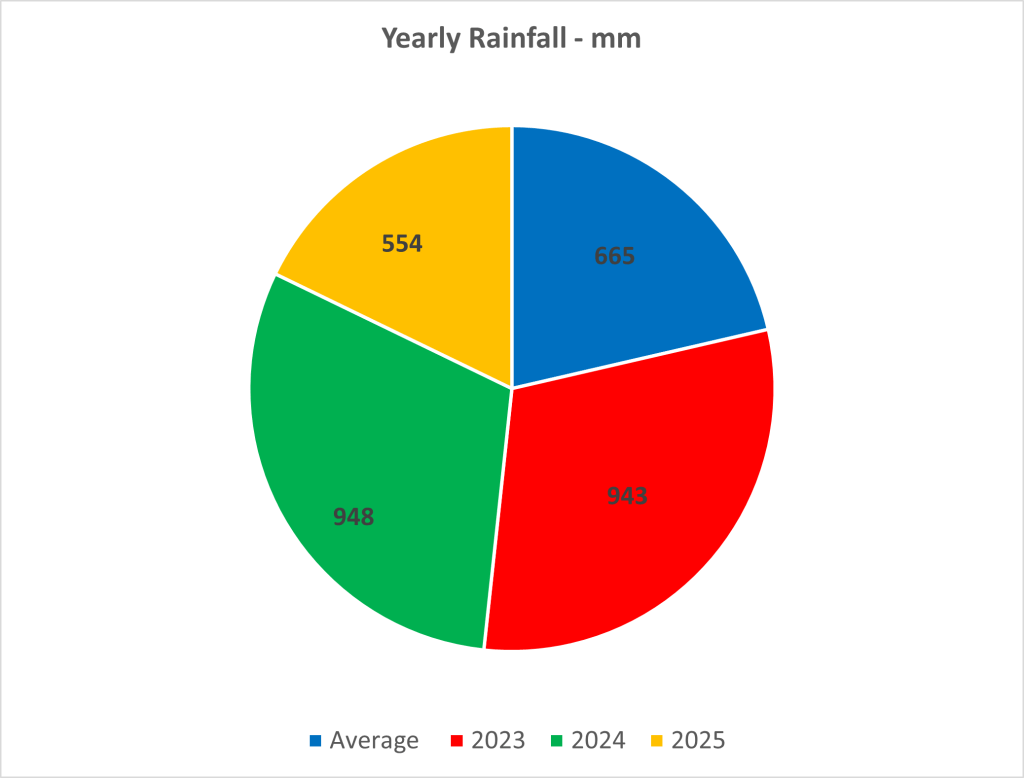
     Aberdeen has an average annual rainfall of around 866 mm whereas some areas in Scotland receive about 3,000 mm of precipitation per year.

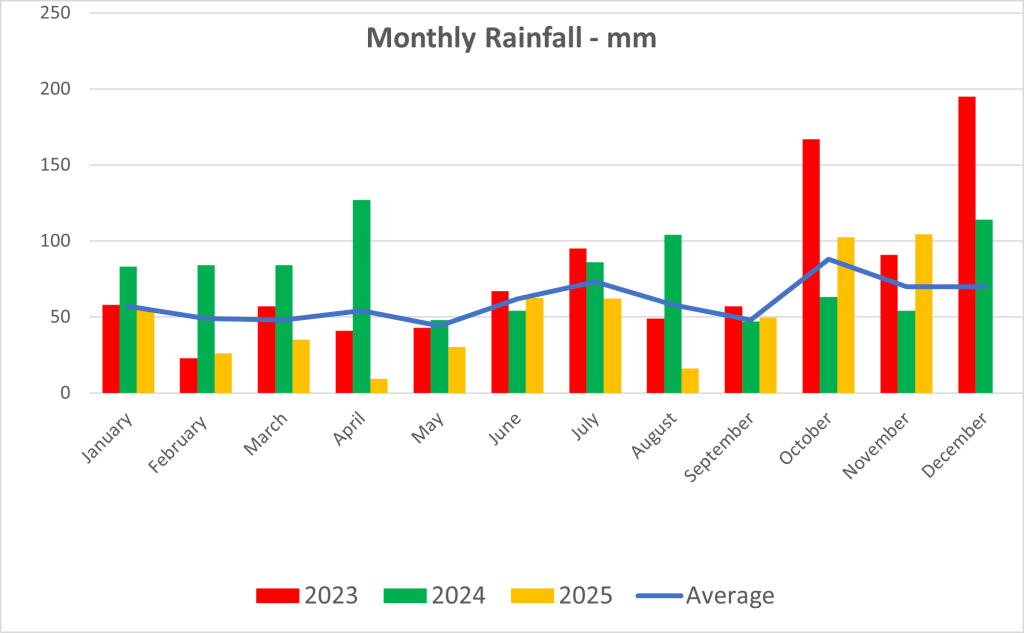
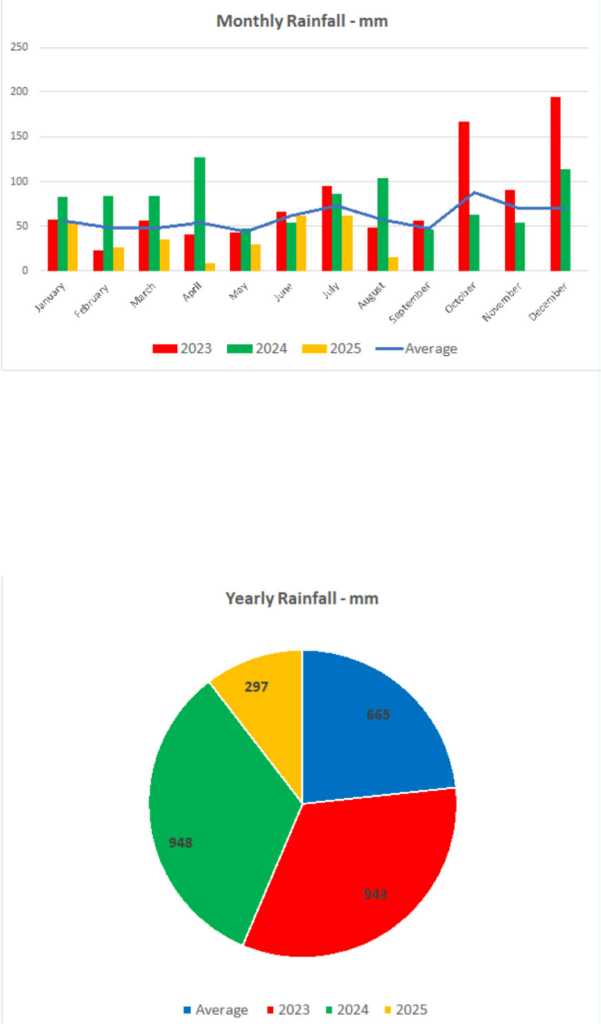
    As you can see from the stats below it was a considerably dry first 9 months of the year on the links. This all changed from October onwards when we have been experiencing prolonged spells of mild and wet weather. The daily data shows that since the start of October there has been rainfall on 53 of the last 90 days, accumulating 255mm in that same period. This equates to 42% of the years rainfall total in the last 3 months.

    The monthly rainfall totals for 2025 are as follows;

    January 55.6mm

    February 26.2mm

    March 35.2mm

    April 9.4mm

    May 30.4mm

    June 62.4mm

    July 62.2mm

    August 16mm

    September 49.6mm

    October 102.8mm

    November 104.4mm

    December 48.2mm

    Total precipitation to date = 602.4mm

  • Staff Trainig – Emergency First Aid At Work

    On 13/11/2025 Assistant Greenkeepers William Mackenzie, Lindsay Skea, Connor Lindsay and Apprentice Greenkeeper Adam Giles attended a 1-day Emergency First Aid at Work (EFAW) training course. The course is ideal to provide our team members with the confidence and skills to respond effectively to a workplace first aid emergency.

    The content of this course was designed to build knowledge and confidence. It has given the attendees the ability to recognise and treat various illnesses and incidents correctly and efficiently.

    The course covered the following topics:

    Seizures

    Role of a first aider

    Use of equipment

    Importance of recording incidents and actions

    Basic hygiene and preventing cross infection

    The priorities of first aid

    Assessing and managing incidents

    Treatment of an unconscious casualty

    Cardio Pulmonary Resuscitation

    Shock

    Wounds and bleeding

    Minor injuries including small cuts, grazes, bruises and small splinters

    Minor burns and scalds

    Choking

    This now means that all 10 members of the greenkeeping team are all now first aid trained and have the skills to respond effectively to a workplace first aid emergency.

  • Microdochium Nivale

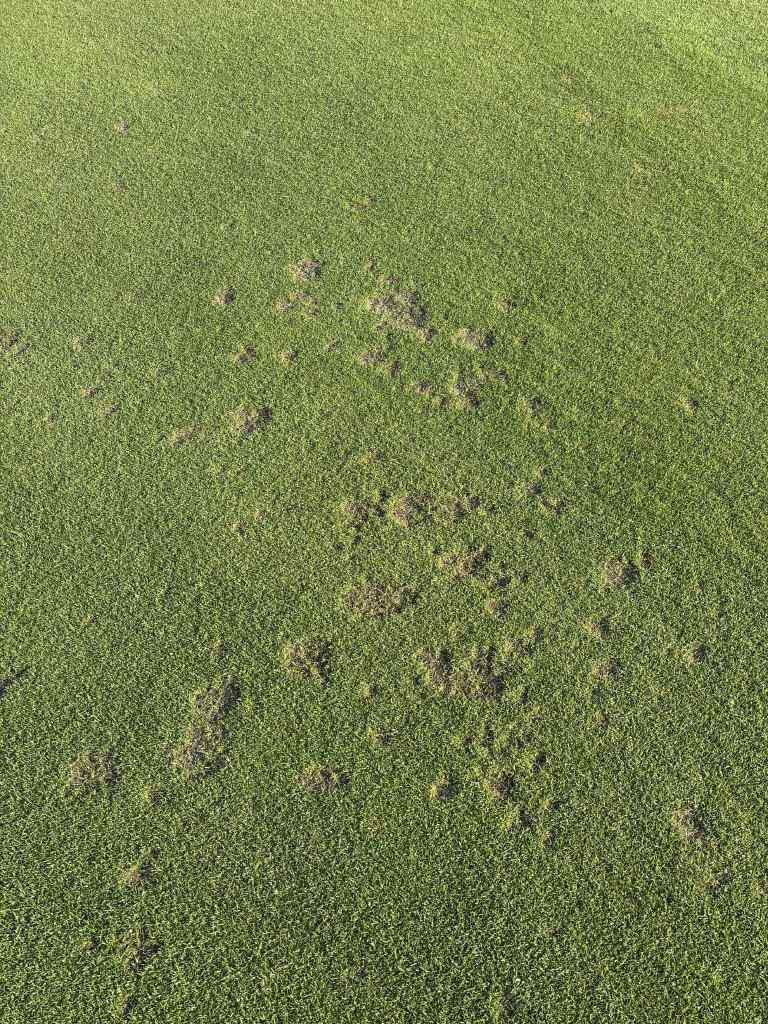
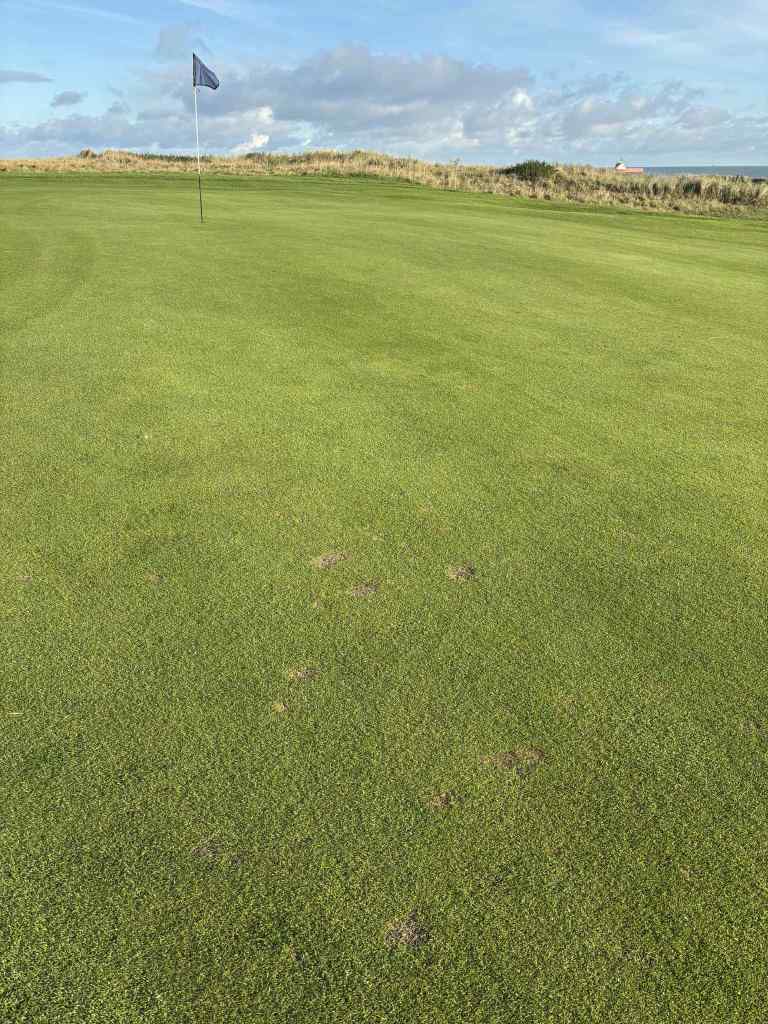
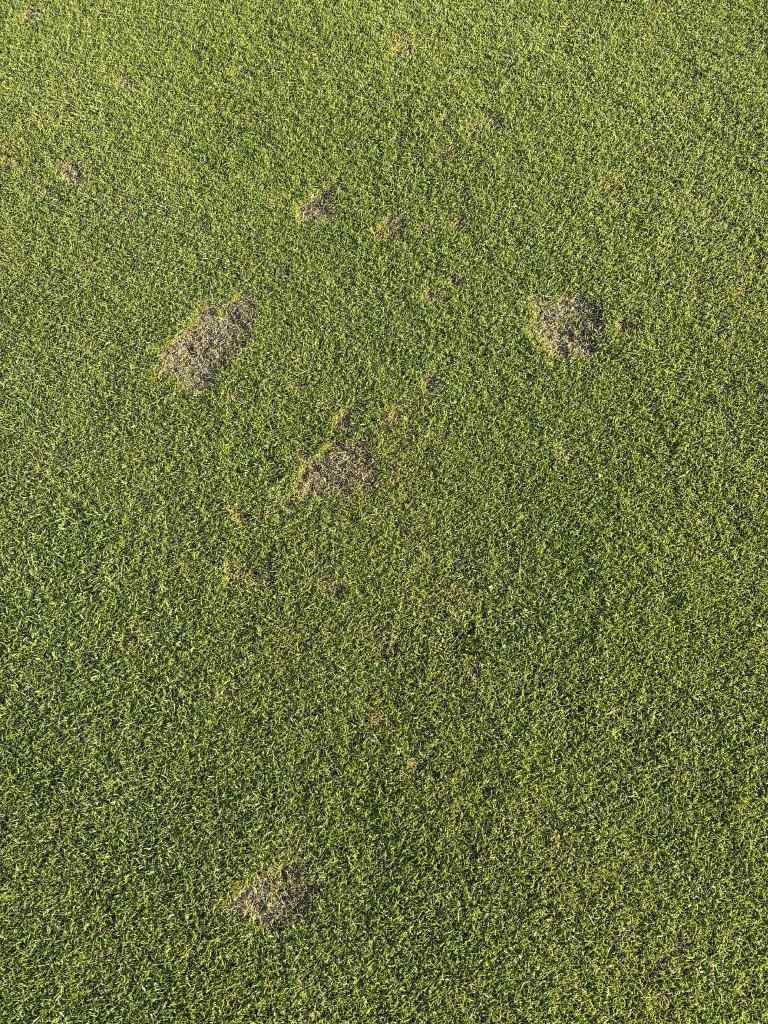
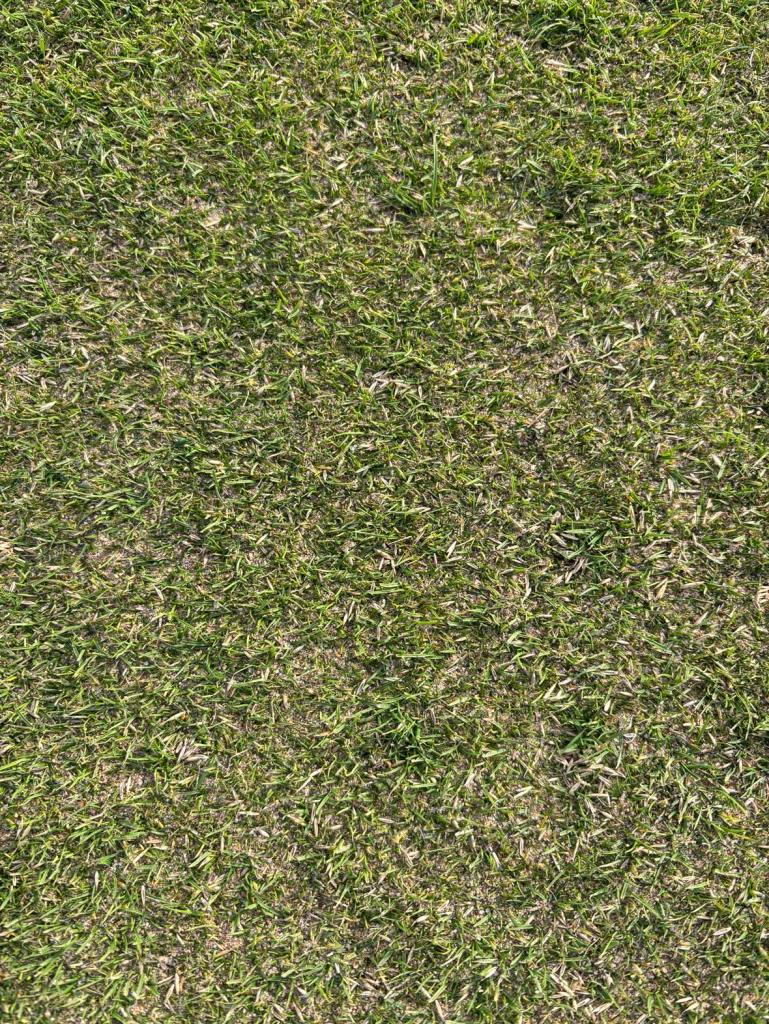
    Microdochium Nivale, previously referred to as Fusarium, is a fungal disease that affects fine turf, particularly in mild, damp conditions. It weakens grass plants and leaves circular scars that can be unsightly while also impacting playability.  

    This Autumn’s outbreaks have been so severe that although we have prepared we have been affected to some degree on various surfaces. Even our consistent maintenance practices could not fully counteract the unrelenting conditions. There have been many instances where dew was reforming throughout the day and even regular dew removal offered only limited protection. 

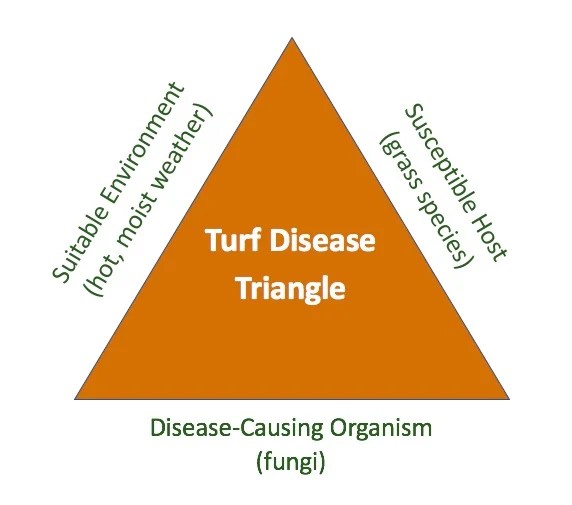
    This autumn’s problems are the consequence of a prolonged period of turf stress followed by a precise sequence of weather events that favored disease. We have come out of an extremely dry spring and summer, and that’s left many plants weakened and under stress. When turf goes into autumn in that condition, it’s more vulnerable. It’s a bit like us; if you’ve been burning the candle at both ends, you’re more likely to get ill because your body’s tired. The grass plant’s no different: it’s been under pressure through spring and a hot, dry summer, so it’s gone into the autumn slightly weaker than normal.

    The prolonged period of high-pressure systems that have moved in during Autumn have trapped moisture near the surface. These weather patterns produced an extended run of heavy dew and mild overnight temperatures that gave the disease everything it needed to establish and spread. Normally high pressure brings settled weather, but these particular systems trapped cool, moist air at ground level. That meant a lot of dew and long periods of leaf wetness, combined with mild overnight temperatures.

    Throughout Autumn we have applied a disease management tank-mix of Liquid Turf hardener, turfite elite, and seamac pro turf fe, together with mantle at half rate alongside preventative fungicides. However, the intensity of the conditions, coupled with the reduced potency of available chemical controls, made it difficult to fully protect every surface. 

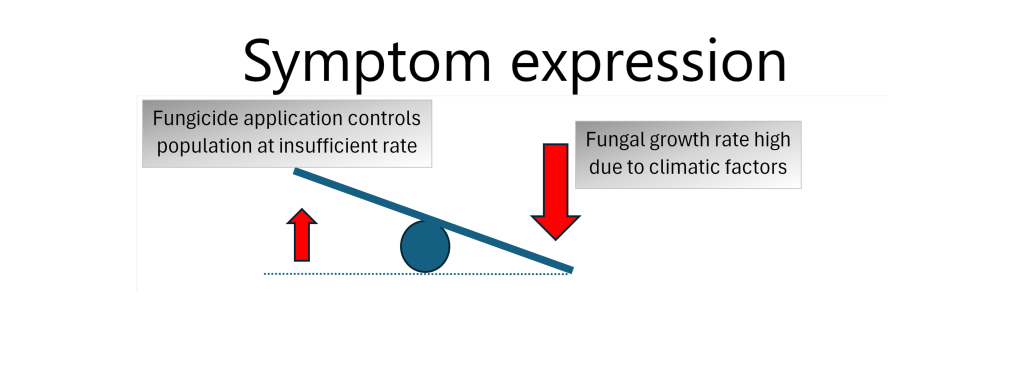
    In the past, when we had more effective fungicides, you had a good chance of containing an outbreak even when conditions were perfect for disease. Nowadays, products are less effective and we must remember, they don’t kill Microdochium; they slow its growth. Once infection gets going, it’s very hard to stop.

    We are seeing warmer, more humid periods extending later into the year, conditions that favour disease development. At the same time, we have fewer effective tools to control disease. So, you’ve got a combination of increased pressure from the climate and reduced chemical control – that’s not an excuse; that’s the reality. 

    This Blog post references ‘The perfect storm’ for high disease pressure article by BIGGA

  • Balgownie – Autumn Greens Maintenance 2025

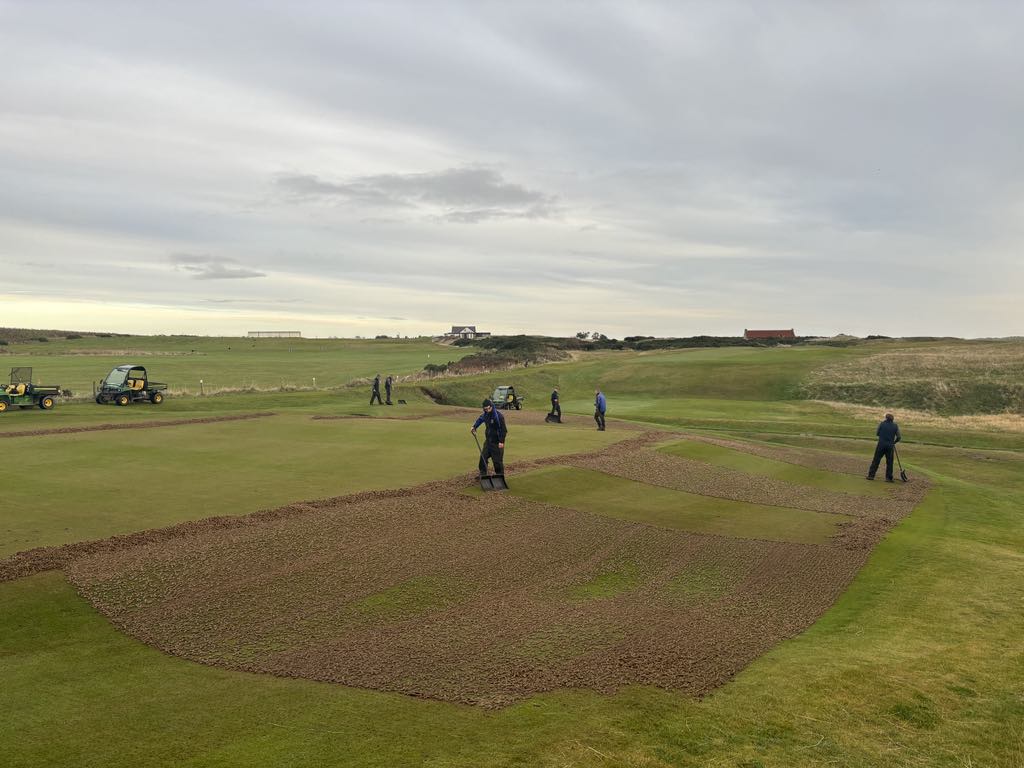
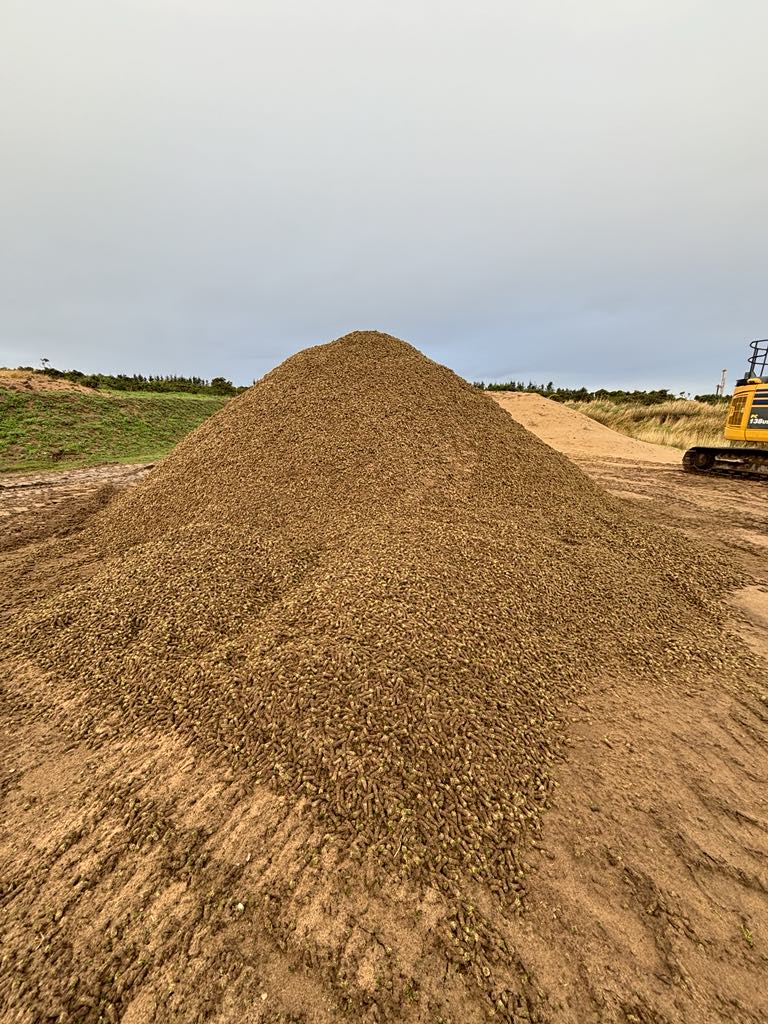
    Over the last 20 Months we have worked hard to reduce Organic matter levels within our soil profile in order to give the perfect environment for fine links grasses to thrive. Having applied over 220 tonnes of sand to the greens already in 2025 we felt at this point our focus turns to a sustained overseeding programme aimed at increasing the content of fine leaved grasses within the grass sward.

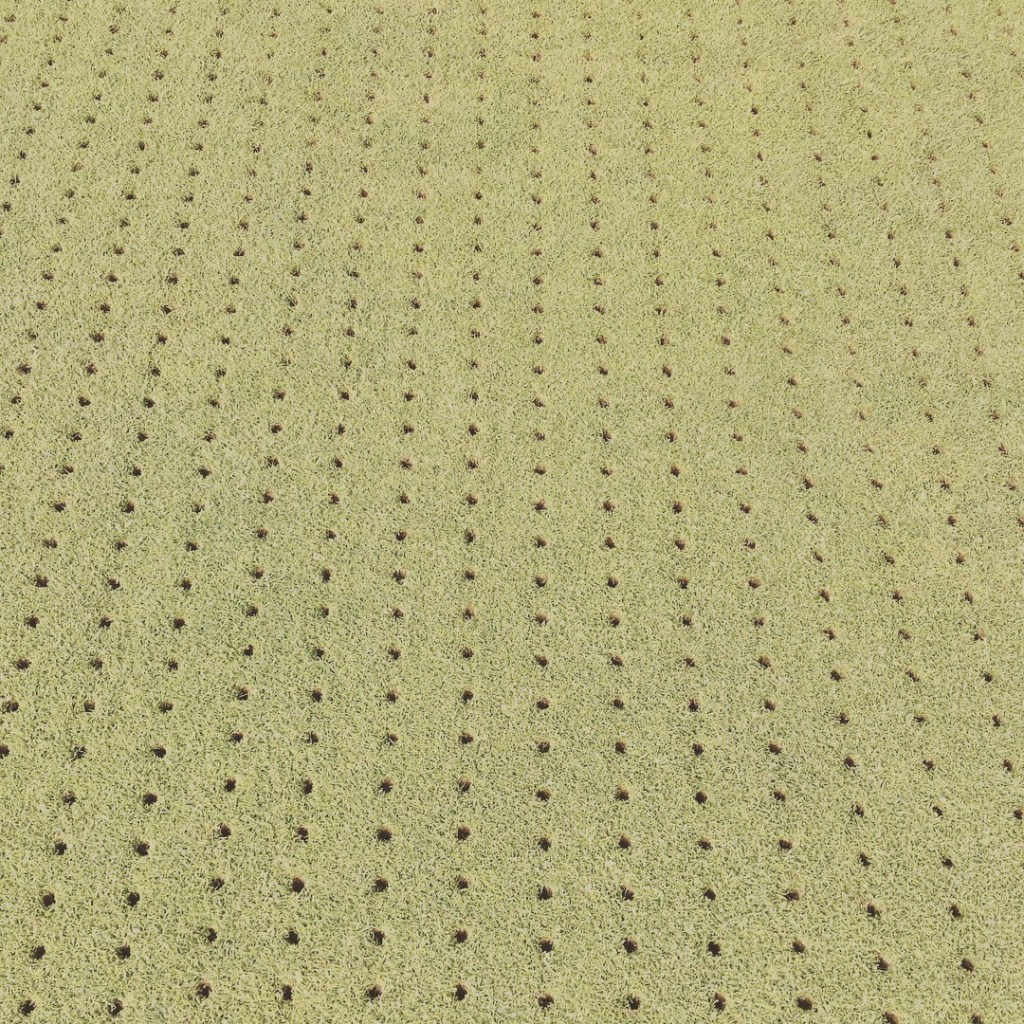
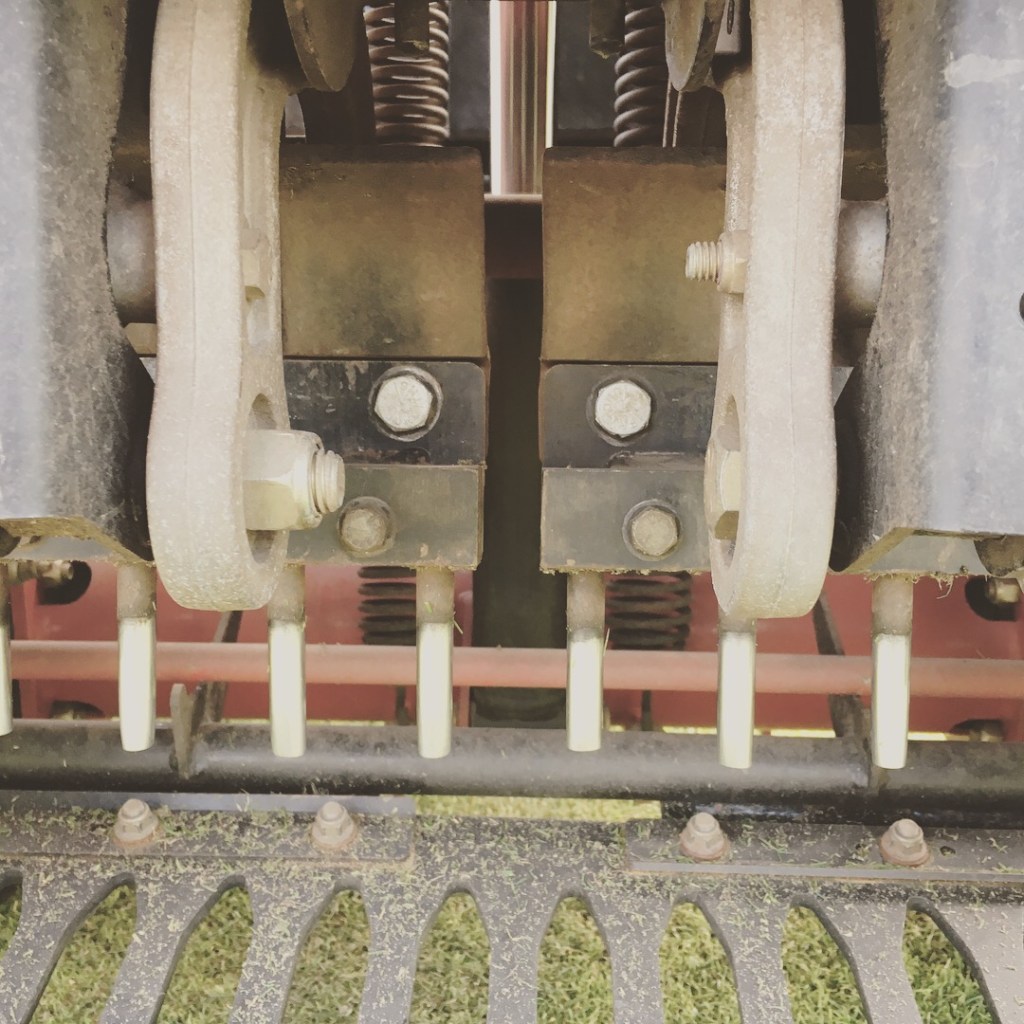
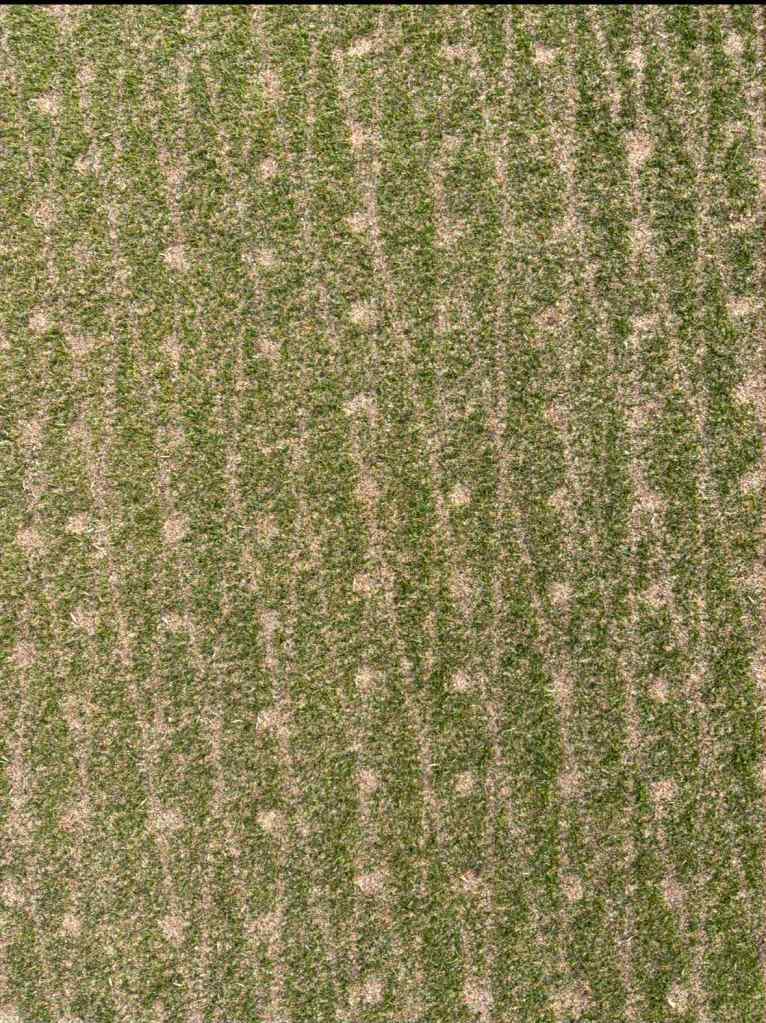
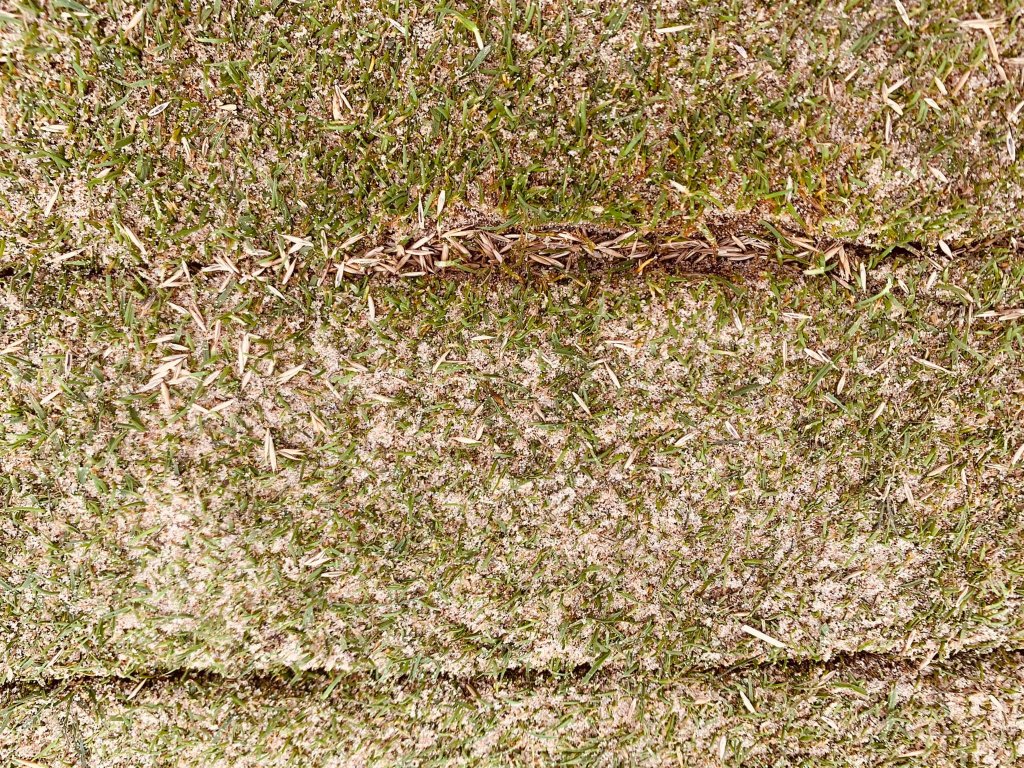
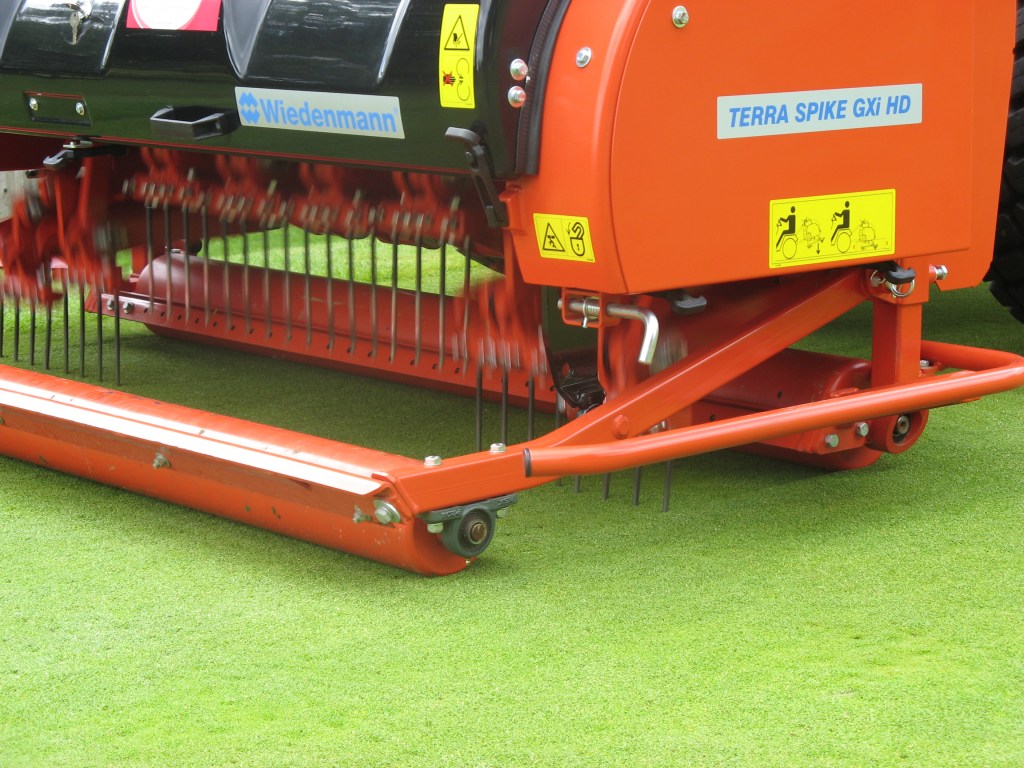
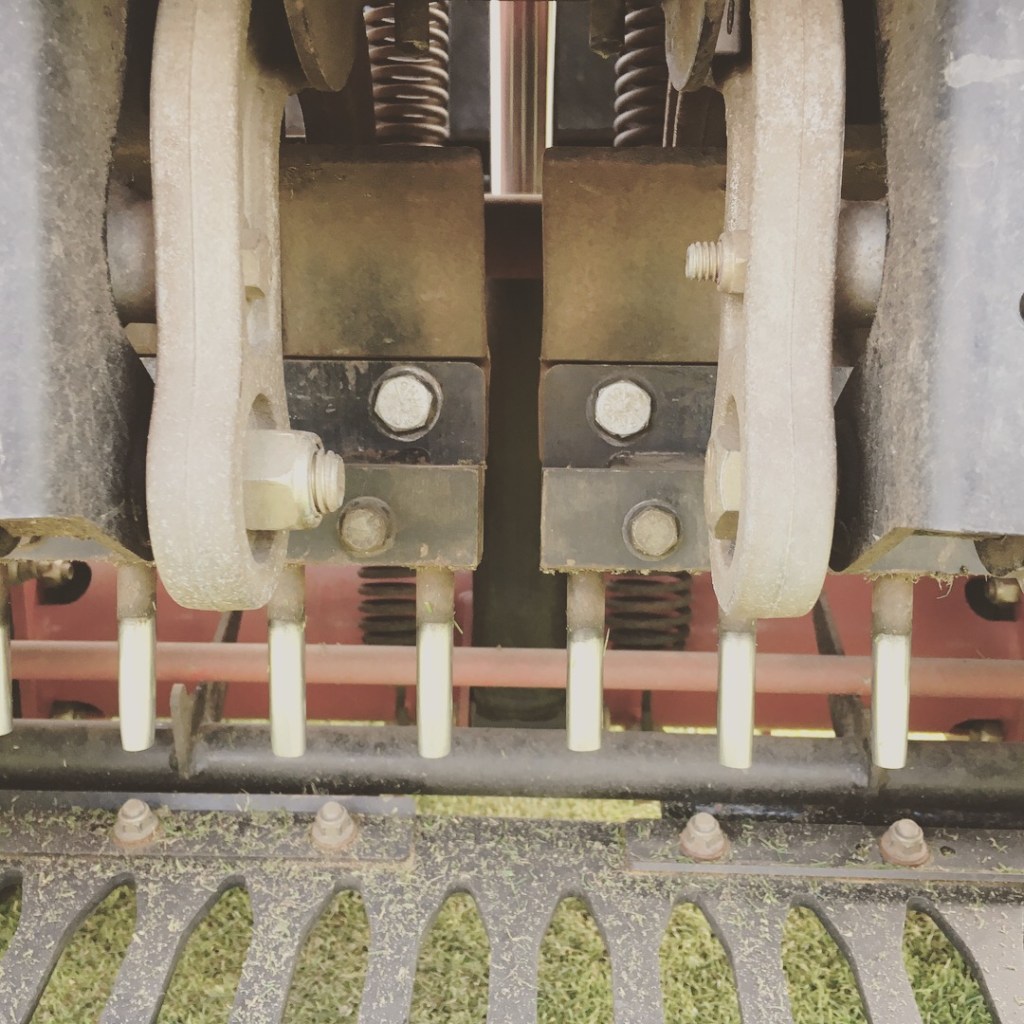
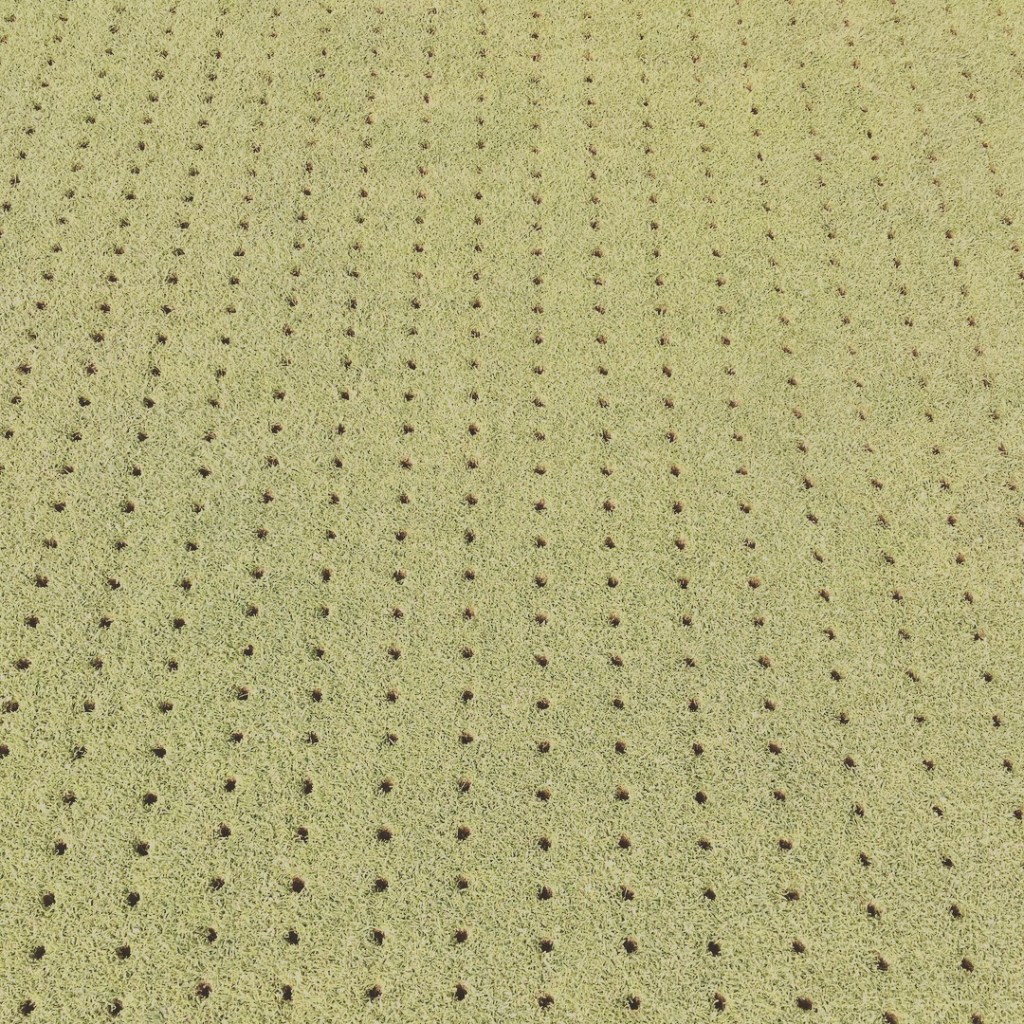
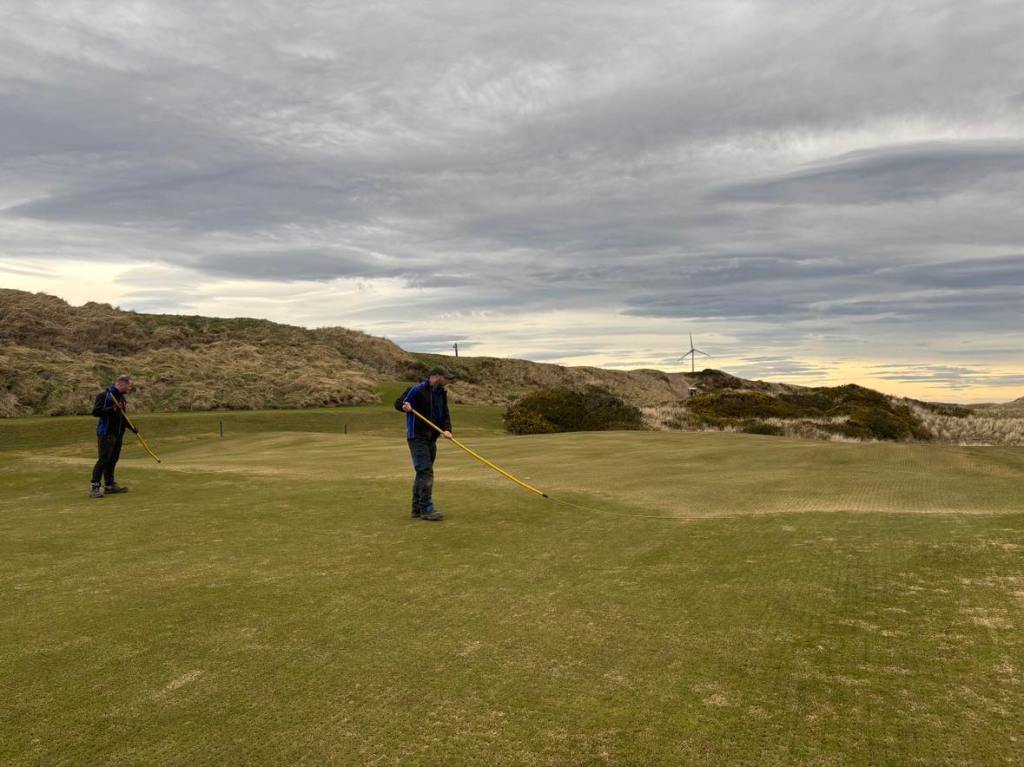
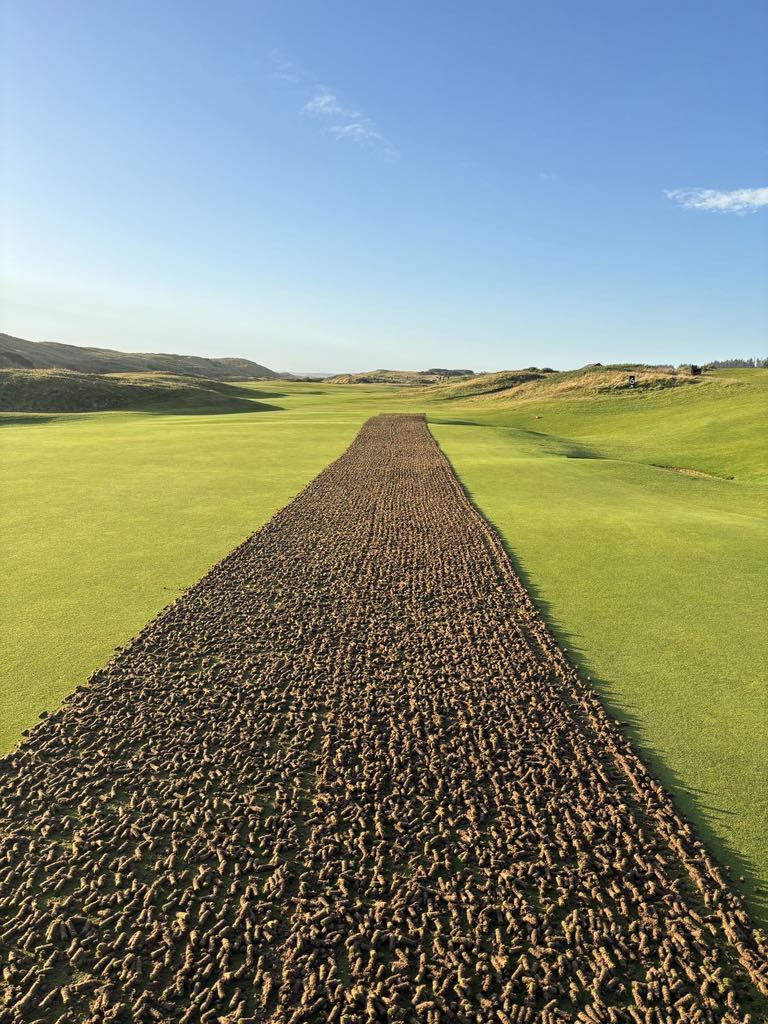
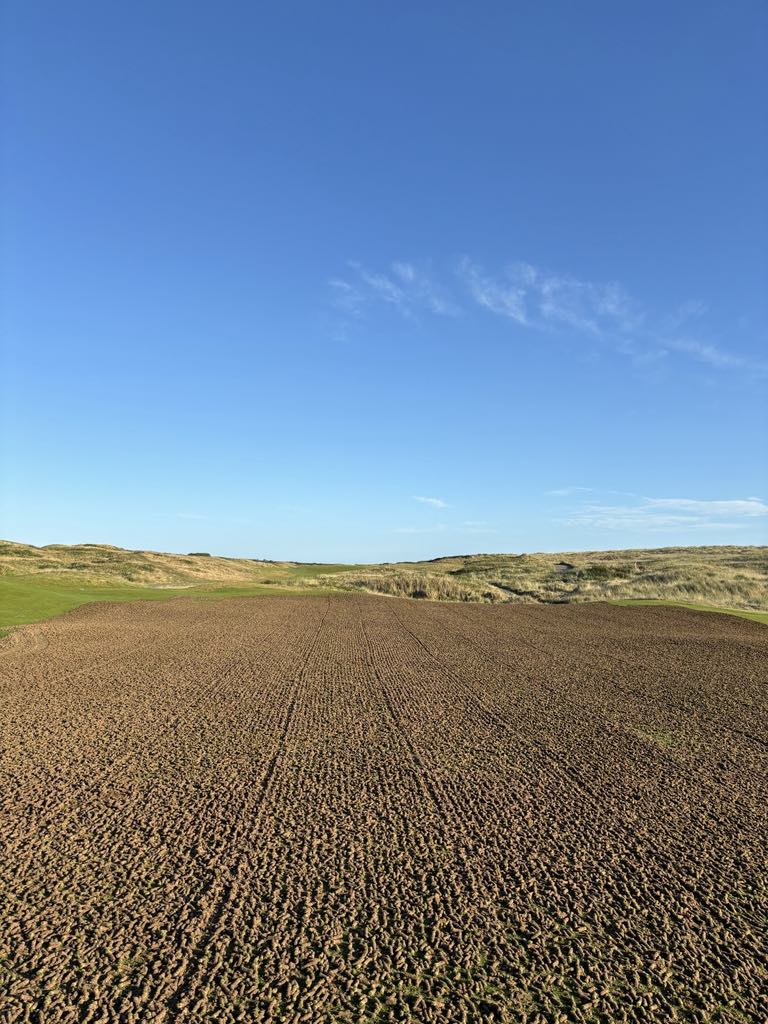
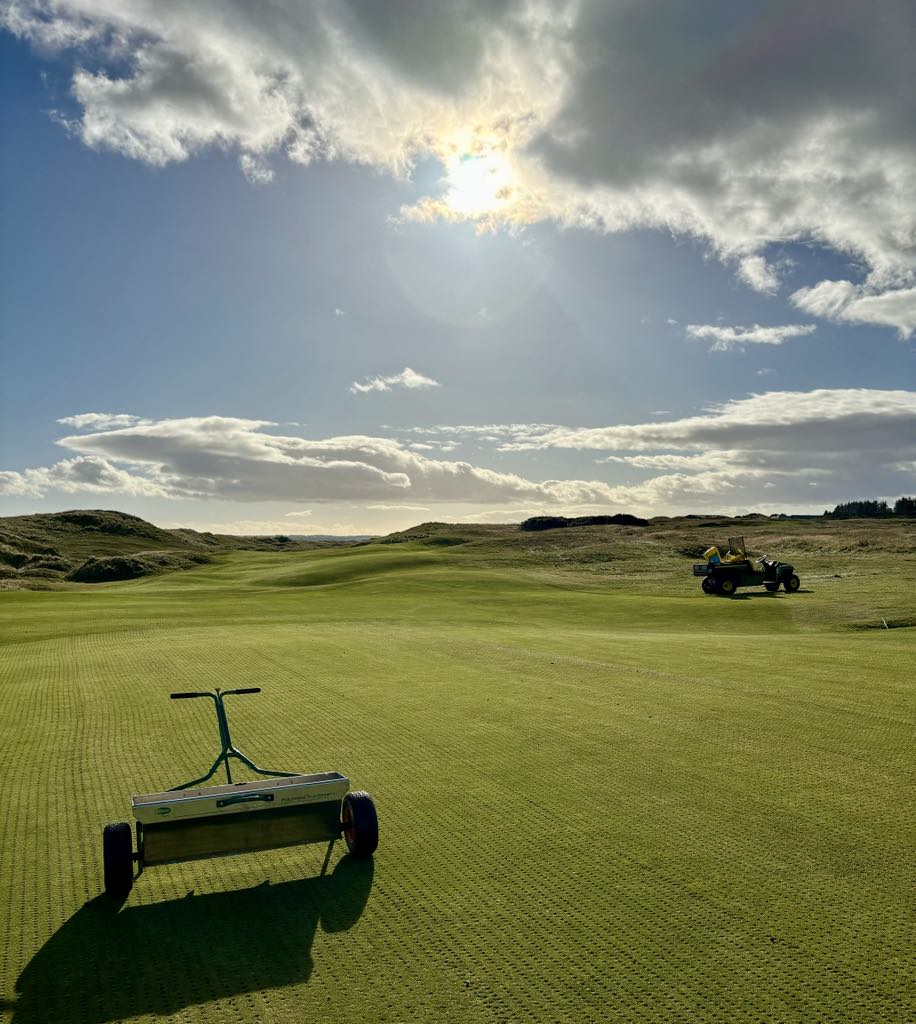
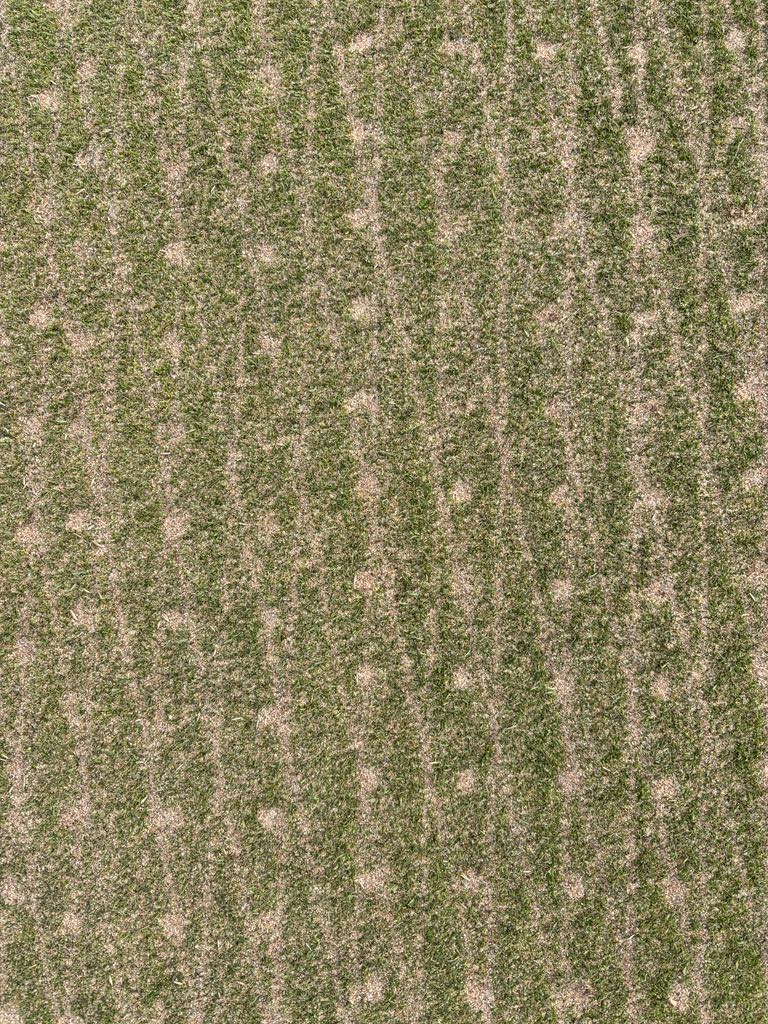
    During the 3 day course closure from 20th -23rd October we aim to deep aerate our greens and approaches using our Wiedenmann GXi8 fitted with 12mm solid tines, working to a depth of 195mm. This will be followed up by running our TORO Procore 648 across the greens to create as many 12mm holes as possible at a depth of 15mm. A process called “Pot Seeding”. A drop spreader will be used to apply Barenbrug Fescue seed before we work any excess seed into the holes using dew switches. We also intend to disc seed the surfaces using our VREDO Super Compact Disc Seeder. The Vredo places seed in a V-shaped slit at a depth of 10mm and spacings of 35mm, directly in contact with the soil for maximum germination rates.

    Following the mechanical aeration and overseeding processes, It is our intention to apply a further 40 Tonnes of our indigenous dune sand to surfaces before we use a Sweep and fill brush to cover the seed within the holes, provide the seeds with the correct growing medium and some protection from the elements. Providing the soil temperatures remain above 6 degrees the seed should germinate within the next 3 weeks, this is due to the slightly cooler conditions forecast at this time of year.

    The surfaces will be rolled using our RB70 Tru Turf rollers to restore smoothness and trueness across the site.

    Fescue and bent are the most appropriate species to links sites across the UK and with adequate management will provide characteristics that are typical of links golf here at Royal Aberdeen. The practice of overseeding is a vital aspect of what we are trying to achieve and will now remain part of our annual maintenance at least twice a year.

    Although a little disruptive for a short period  please be patient as we attempt to change the botanical composition of the sward to a more desired species and in turn finer links like surfaces all year round.

  • Winter Improvement Programme 2025/26 – Balgownie Links

    Hole 1

    Reconstruction of left-hand fairway bunker. Add new revetted face and replace surrounding turf

    Reconstruction of both greenside bunkers. Add new revetted face and replace surrounding turf

    Hole 2

    Increase size of Green tee and turf to allow more tee space and improved wear tolerance.

    Hole 6

    Reconstruct left hand greenside bunker. Add new revetted face and replace surrounding turf

    Hole 7

    Reduce height of green tee to improve visibility of fairway and right hand fairway bunkers. Increase size of teeing area to allow winter play and increased wear tolerance.

    Hole 8

    Reconstruction of green and approach to include the revetment of all 10 bunkers and improved walk off to 9th tee. Remove existing turf, improve roortzone, re contour green and bunkering and re lay turf. 

    Hole 10

    Reconstruction of left-hand fairway bunker. Add new revetted face and replace surrounding turf

    Reconstruct 2 Right hand greenside bunkers. Add new revetted face and replace surrounding turf

    Hole 12

    Reconstruction of both Right and left-hand fairway bunkers @ 50 yards from green. Add new revetted face and replace surrounding turf

    Hole 13

    Reconstruction of Right-hand greenside bunker. Add new revetted face and replace surrounding turf

    Hole 14

    Reconstruction of Right-hand greenside bunker. Add new revetted face and replace surrounding turf

    Hole 15

    Reconstruction of both yellow/white and red tees. The tees will be raised and new rootzone added to provide a drier links like surface and a better view of hole/less intimidating tee shot. Reduce mounding short of road to give better visibility of the fairway and north sea/ city backdrop from the tee. Improve pathway from tee by removing gravel and introducing double width turf pathway. 

    Reconstruction of all 3 greenside bunkers. Add new revetted face and replace surrounding turf

    Hole 16

    Reconstruction of all 3 left-hand greenside bunkers. Add new revetted face and replace surrounding turf

    Hole 18

    Reconstruct 3 x greenside bunkers. Add new revetted face and replace surrounding turf.

    Improve pathway from tee to fairway by increasing width and removing out of character steep gravel path

    Turfing worn areas

    There a quite a few areas around the course which require re turfing due to drought conditions and wear throughout 2025.

    Gorse Management

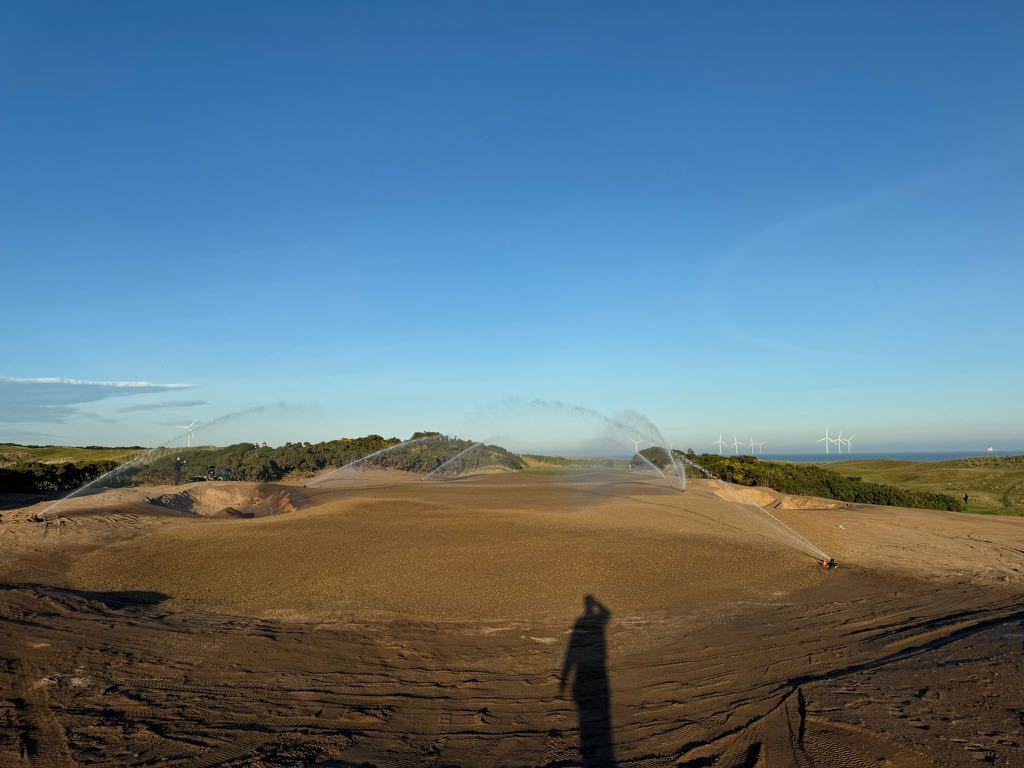
    This will continue throughout the winter period using our own machinery and the hire of a machine suitable to work on steeper slopes. There was also fire damage to gorse which will need to be cleared to allow regeneration

  • Staff Training – Future Turf Managers Initiative(FTMI)- Class of 2025

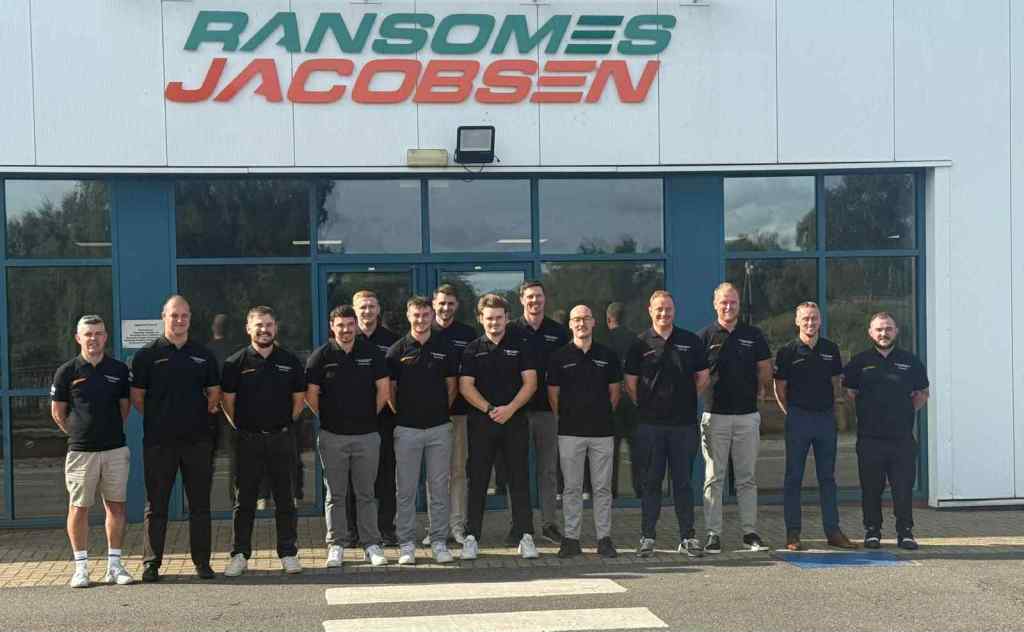
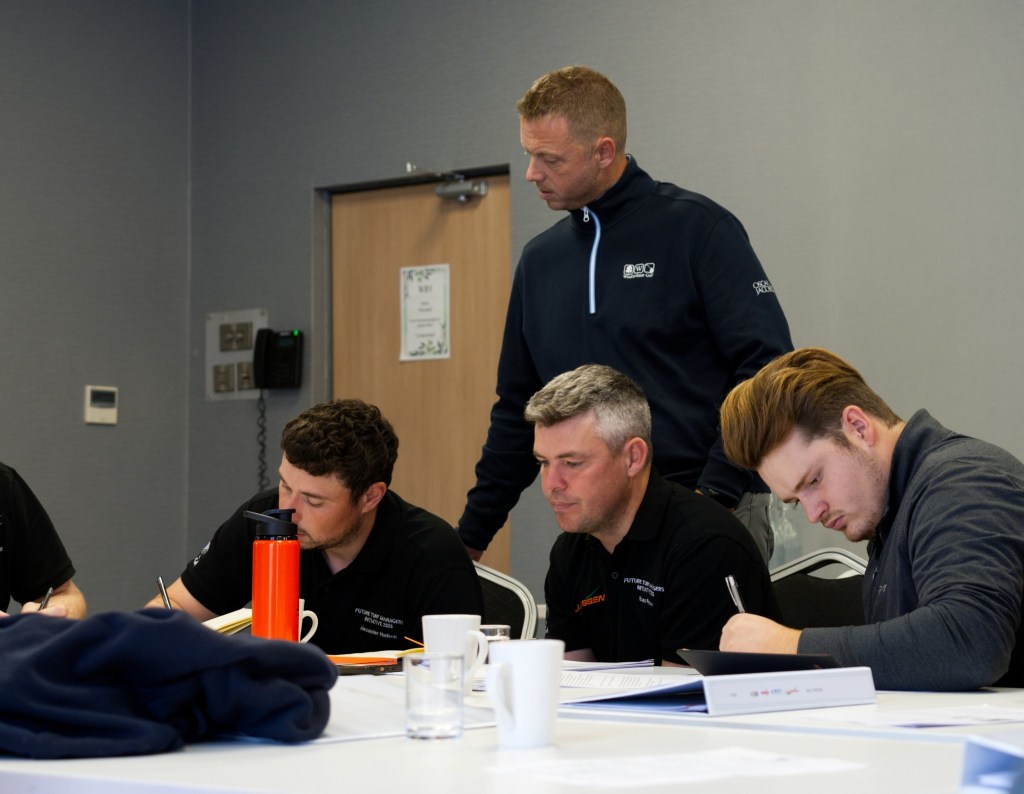
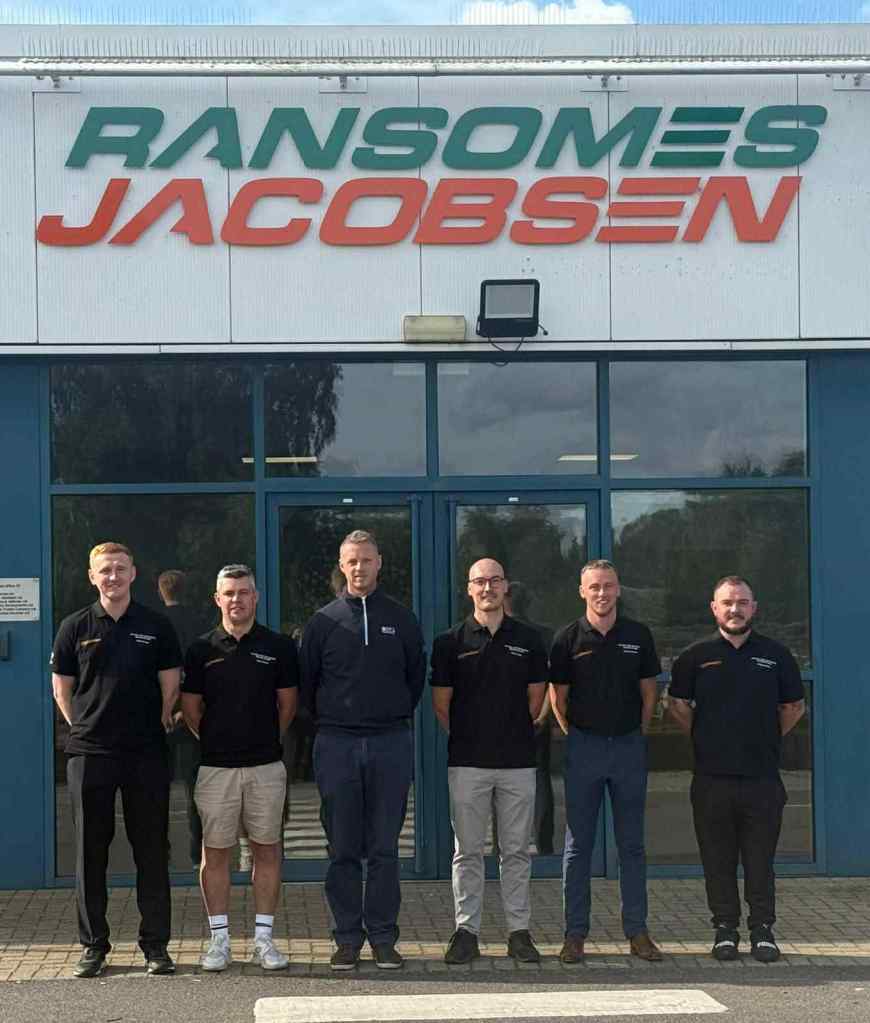
     First Assistant Greenkeeper Euan Polson was recently selected to be part of the Future Turf Managers Initiative 2025, a training programme to help talented greenkeepers progress towards head greenkeeper and course manager roles.

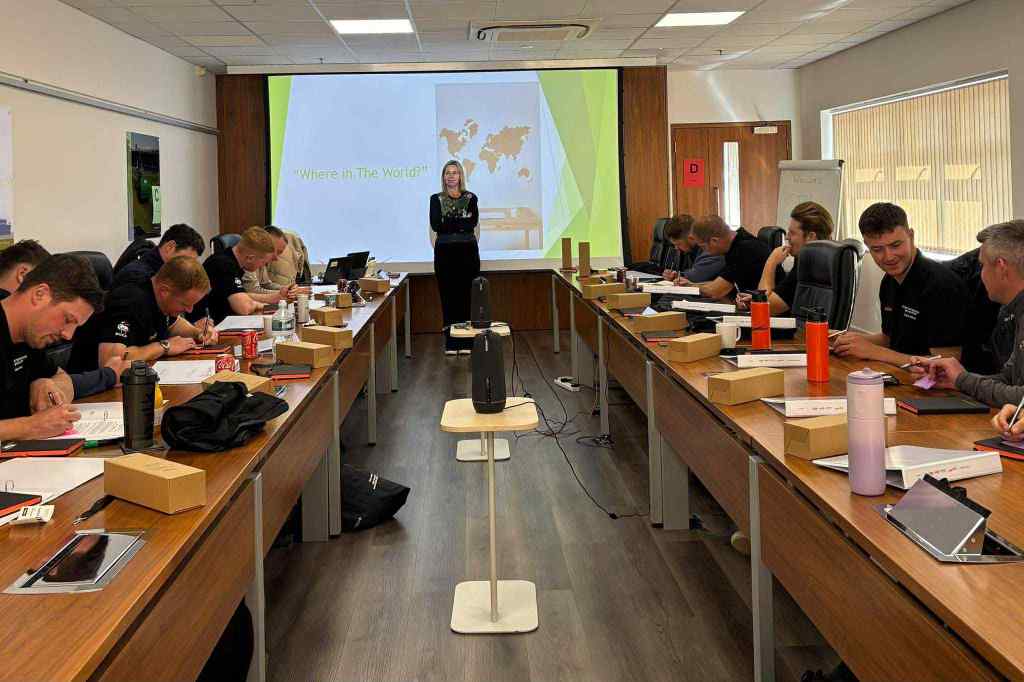
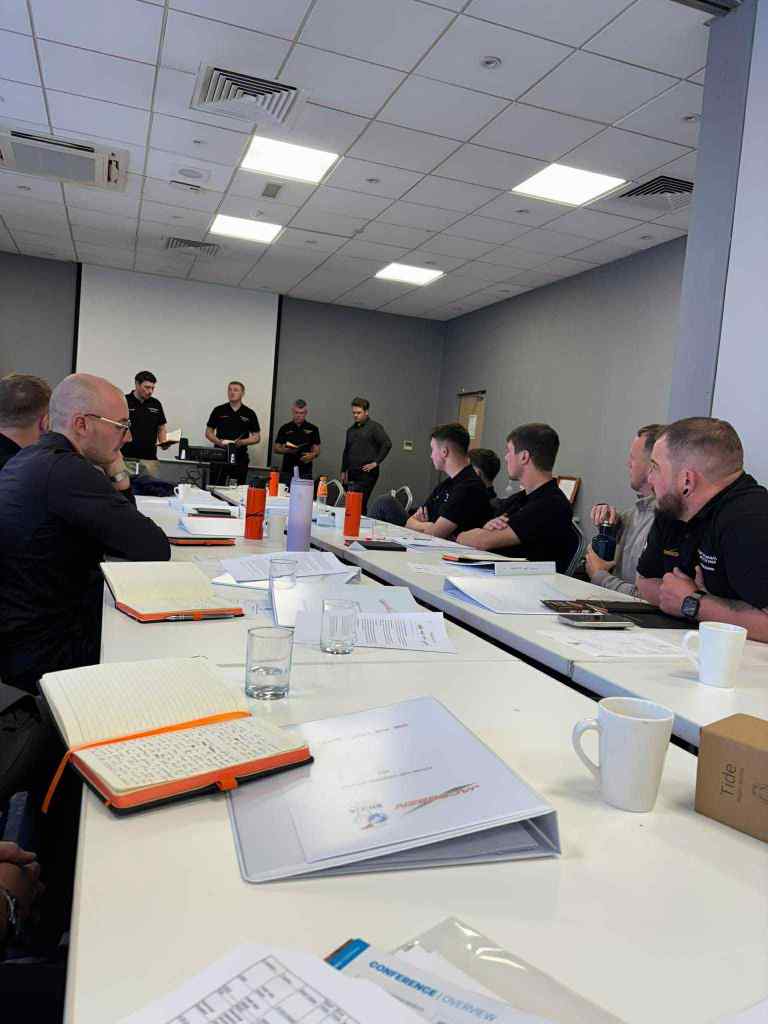
    FTMI was held at Ransomes Jacobsen’s headquarters in Ipswich from 24-25th September and will be followed by a series of online education sessions before culminating in two days of education at BTME in January 2026.

    The Future Turf Managers Initiative (FTMI) has been designed to provide practical tools and guidance, to help candidates to pursue their career aspirations. It is aimed at up and coming greenkeepers who want to make the leap to Course Manager. Focusing on personal and professional development, rather than agronomy based subjects.

    Jacobsen and BIGGA recognise the importance of preparing greenkeepers to take on the role of Head Greenkeeper or Course Manager. It designed to provide practical tools and guidance to help the candidates to pursue their career aspirations through this professional development conference and utilises the expertise of leading Course Managers, dynamic trainers and industry experts to mentor and educate the next generation of industry leaders giving them a clear understanding of what the future holds and a realistic overview of the expectations that come with the role of a Course Manager.
    This intensive training programme covers:

    • Presentation Skills
    • Communications
    • Presenting a Professional Image
    • Interview Techniques
    • Successful CV’s
    • Stress Awareness
    • Building a Budget
    • Becoming a Leader
  • Balgownie – Disease prevention

    Disease prevention and control is a major factor in the successful management of our fine turf surfaces here at Royal Aberdeen Golf Club. We utilise numerous cultural and chemical methods as part of integrated pest management (IPM) programme to reduce disease incidence and severity. Pathogens are disease causing agents that significantly affect the visual and playing qualities of our surfaces. While there are numerous fungal and bacterial pathogens in the UK the most common and damaging is Fusarium – Microdochium patch (Microdochium nivale).

    Fusarium is spread by wind, water, and by foot traffic and outbreaks are often seen during periods of mild cool wet weather and heavy dews.

    To help the plant naturally fight off this disease we applied an combination of Elevate Fe – a complexed liquid iron and sea nymph super concentrate – a liquid seaweed, at an application rate of 10l/ha .  These products are ideal for strengthening turf, minimising the effect of turf pathogens – rebuilding the natural suppression status of depleted soils and encouraging strong root systems through plant metabolic and microbial activity.

    Although the surfaces are a little greener than we would like after the application of these two products the surfaces are healthy and showing very little signs of disease activity.

  • Rainfall Data Update 2025

    Rainfall is a key element of Scottish weather and it dictates how and when the golf course maintenance can be carried out here at Royal Aberdeen Golf Club.


    This year has been an incredibly difficult year with a prolonged winter and cooler temperatures lasting until April, meaning growth was slow at the start of the season. The  freezing temperatures were followed by a prolonged dry spell which meant our irrigation system was being used on a daily basis throughout early Spring. 

     Aberdeen has an average annual rainfall of around 866 mm whereas some areas in Scotland receive about 3,000 mm of precipitation per year.

    As you can see from the stats below it has been a considerably dry year on the links,  we are currently around 167mm below the average precipitation rates for Aberdeen and in comparison to last years data we have had around 373mm less to date.

    The monthly data is slightly misleading whereas the daily chart shows a much different story with long spells where we ran into weeks without any precipitation at all.

    The monthly rainfall totals for 2025 are as follows;

    January 55.6mm

    February 26.2mm

    March 35.2mm

    April 9.4mm

    May 30.4mm

    June 62.4mm

    July 62.2mm

    August 16mm

    Total precipitation to date = 297.4mm

  • Tournament Support – DP World Tour – Nexo Championship

    First Assistant Greenkeeper Euan Polson was recently selected to be part of the tournament support team during the DP World Tour Nexo Championship at Trump International. He spent the mornings changing, painting holes and rolling greens as part of the daily set up ahead of each days play from 28th July – 3rd August 2025.

    Volunteering at prestigious events demonstrates personal and professional potential and growth development while expanding professional skills, including problem solving and organisational abilities. This experience will be key to Euan’s development and gives him an excellent insight into the conditioning and standards expected during these tournaments and prepares him for when we play to host to any major tournament in the near future. Attending the event also advances his BIGGA Continuing Professional Development (CPD) credits.
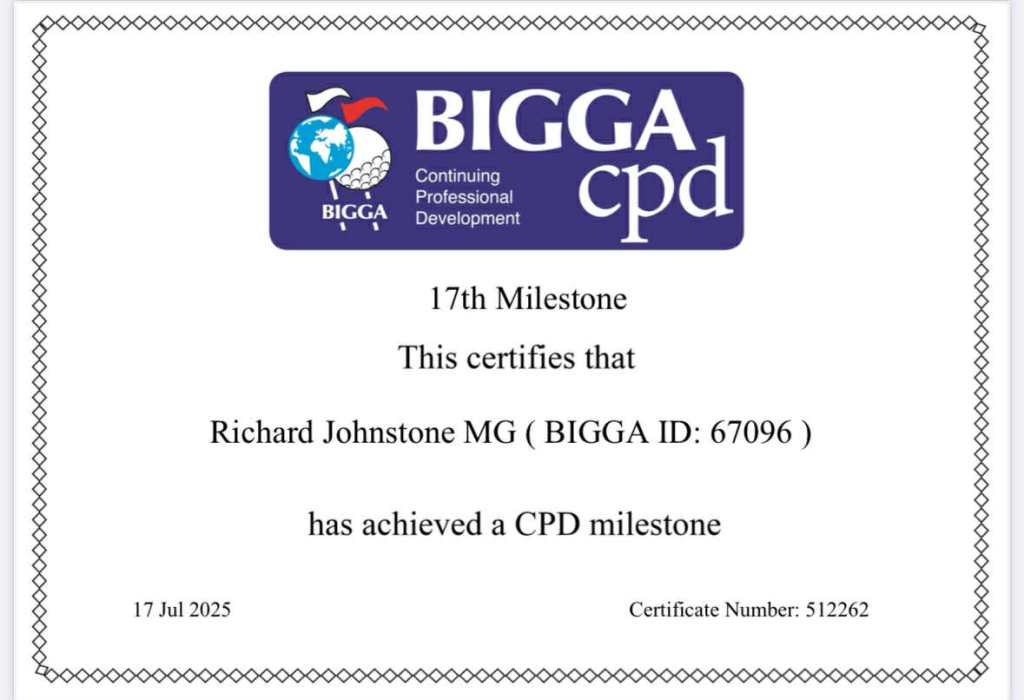
  • Staff Training – BIGGA CPD Milestone Certificate
    On 17/07/2025 Course Manager Richard Johnstone was awarded with a 17th BIGGA CPD Milestone certificate in recognition of his continued education and training in 2025.
    The BIGGA CPD scheme is made up of members who are looking to improve their professional knowledge and competence within the industry while developing skills and personal qualities necessary for the execution of technical duties throughout their working life
    “No professional should stand still – we are learning – all the time”

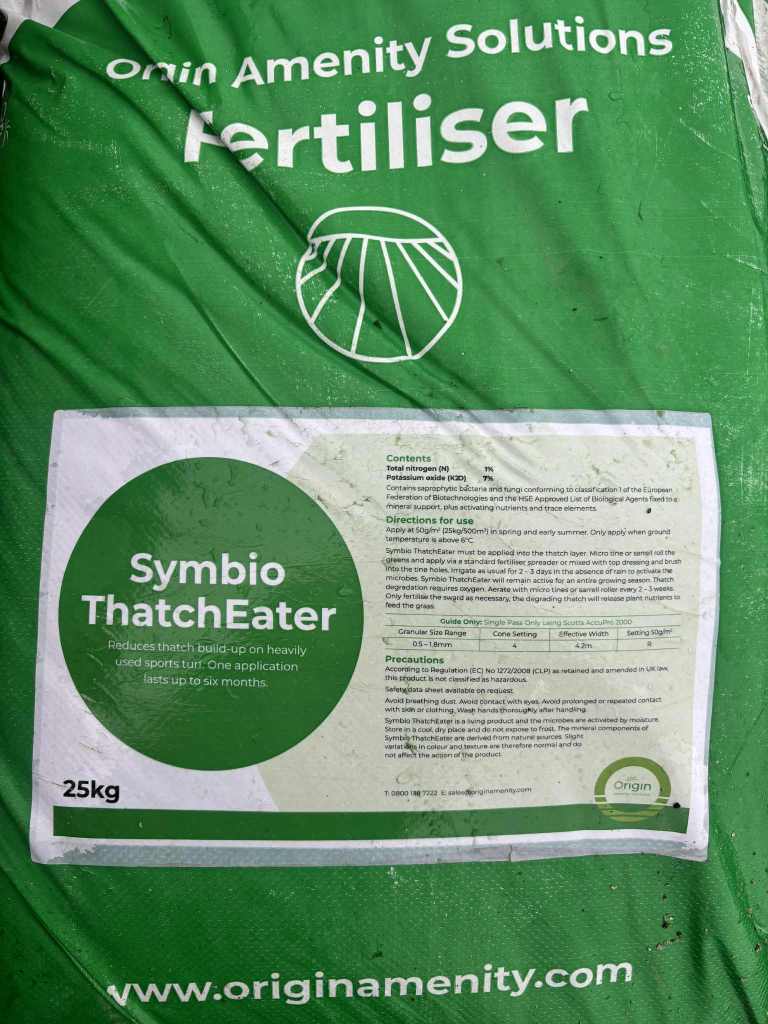
  • Balgownie – Application of Symbio Thatcheater

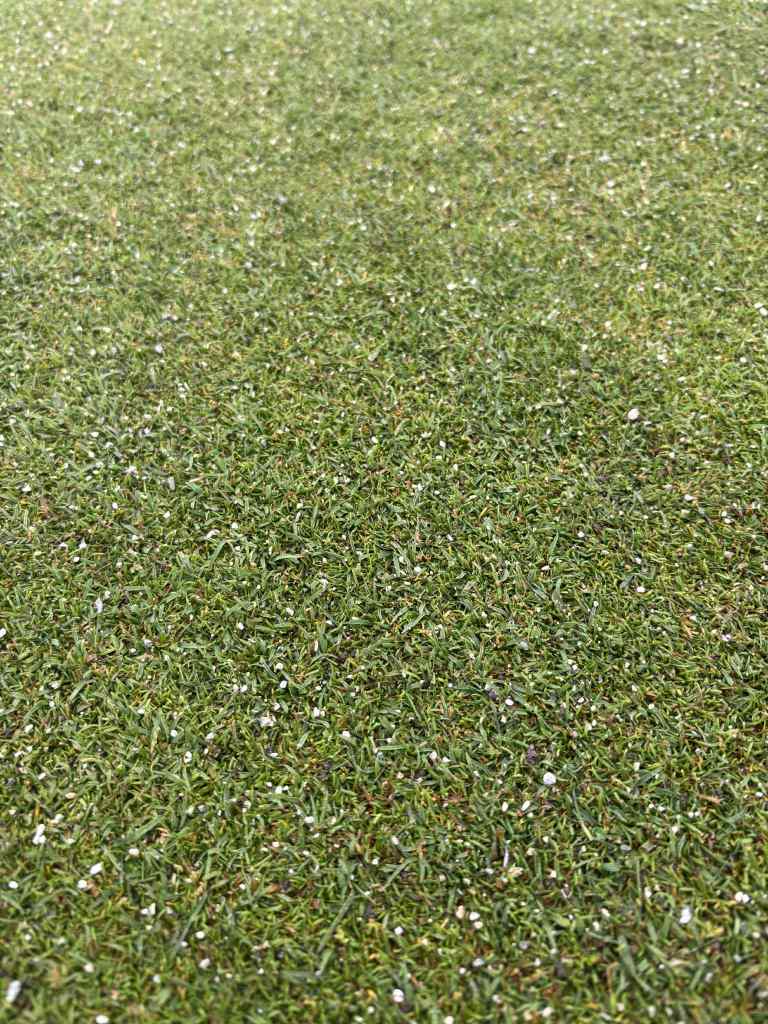
    Due to the High Organic matter content within the profile of our surfaces, we decided to apply a granular product called Thatch eater which is typically done to biologically manage and reduce thatch without the need for aggressive mechanical removal through the main playing season. The Thatcheater was applied directly after aeration was carried out so the product was incorporated into the soil profile. We have been working hard since Spring 2024 to get our Organic Matter levels back within target levels and this product added to work along side regular maintenance practices such as aeration, verticutting and sand topdressing.

    Below are some of the reasons we chose to apply Thatcheater:

    1. Thatch Reduction Without Disruption
      • Excess thatch (a dense layer of organic matter between the grass and soil) can hinder water infiltration, gas exchange, and root growth.
      • Thatch Eater contains beneficial microbes that naturally break down this organic layer without the need for aggressive scarification or hollow coring.
    2. Improved Rootzone Health
      • The microbial action helps convert dead organic material into humus, improving soil structure and nutrient retention.
      • Healthier soil biology promotes deeper rooting and more resilient turf.
    3. Enhanced Drainage and Surface Firmness
      • As thatch breaks down, water moves more freely through the soil profile, reducing the risk of disease and soft, spongy surfaces.
    4. Supports a Biological Management Program
      • Thatch Eater is often used as part of a biological or low-input turf management approach, reducing reliance on chemical fungicides and synthetic inputs.
    5. Reduced Risk of Disease
      • Thatch can harbor fungal pathogens and pests. Its breakdown reduces disease pressure, especially during humid or wet periods.
    6. Improved Playing Conditions
      • Firmer, smoother, faster greens with consistent ball roll—without major downtime from mechanical thatch removal.
  • Balgownie – Verti Cut Greens & Approaches

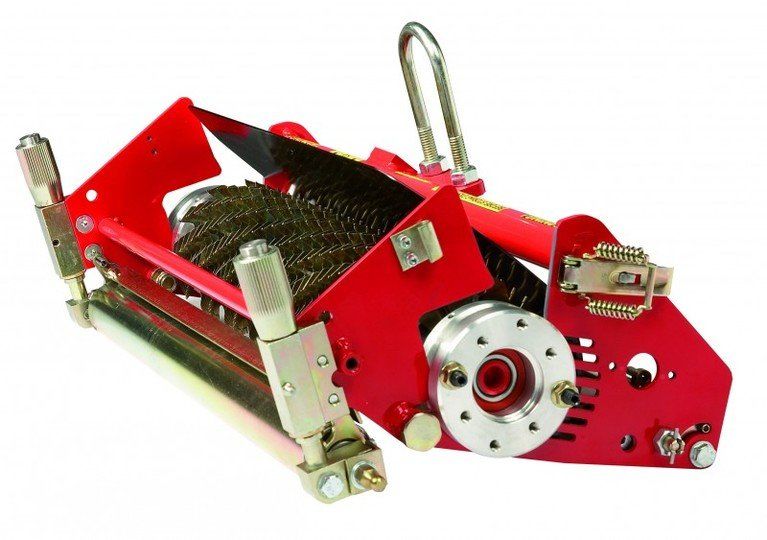
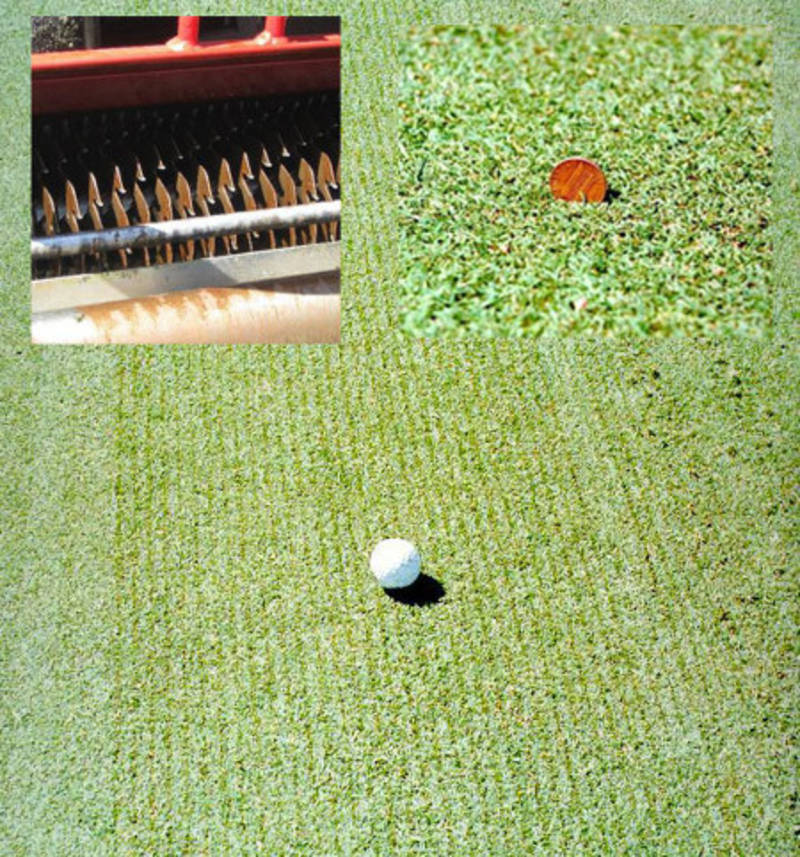
    On the 3rd July 2025 we took the opportunity to run the Greentek Thatch Away Supa System Verticutting Cassettes across the greens on approaches.

    Verti-cutting which is short for vertical mowing is an important turf maintenance practice used to improve the health and playability of the putting surfaces.Unlike regular mowing, which cuts horizontally, verti-cutting slices into the canopy to a depth range of 0-4mm.

    The main reasons for carrying out this practice are to remove and help control thatch, allow better air, water and nutrient movement, promote upright grass growth, giving the ball a smoother and faster roll, helps stimulate lateral tillering and new shoots, resulting in denser, healthier turf, helps reduce grain by cutting lateral stems and forcing vertical growth and by opening the turf canopy, it improves light, air, and fertiliser penetration into the soil.

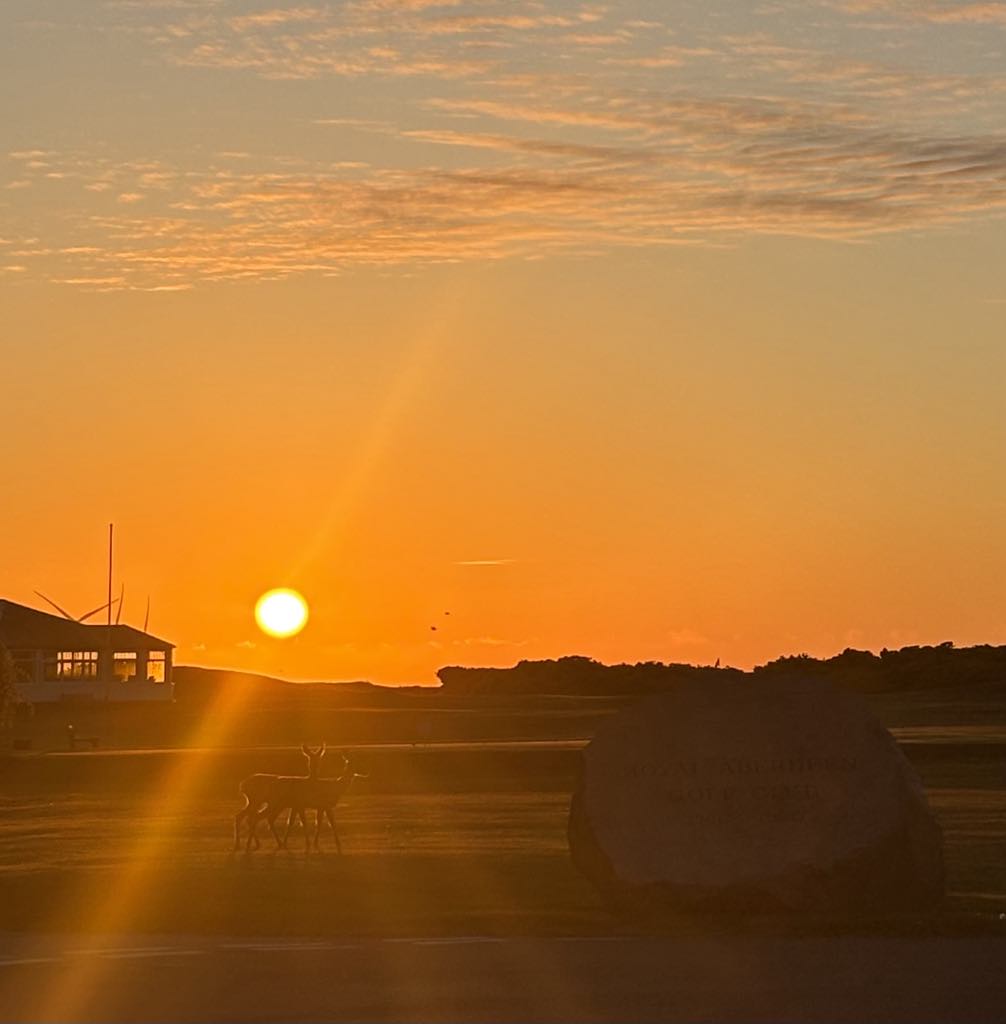
  • Balgownie – Sunrise

    Early mornings at Royal Aberdeen

    Sunrise at Balgownie is not just about the beautiful sights, but also the wonder of nature all around us

  • Balgownie – Pot Seeding Fescue

    Over the last 14 Months we have worked hard to provide the perfect environment for fine links grasses to thrive. The composition of grass species within the surfaces in early 2024 was a Bent / Poa mix varying in quantities from green to green and our plan was to introduce more fine leaved Fescue grass species into the surfaces and reduce the amount of Annual Meadow Grass content.

    After Hollow coring our greens and approaches in October 2024 we carefully studied the early season competition calendar and found the perfect window of opportunity to carry out a spring maintenance operation to cause as little disruption to play as possible, during a period where soil temperatures and growing conditions were on the rise, allowing recovery times to be kept to a minimum. We hope that both these maintenance operations along with many other maintenance operations carried out over the last 14 months will have helped reduced any excess organic matter in the top 20mm within the profile.

    We took the decision to apply a mix of Barenbrug Bar Fescue and Origin R117 seed which are both a 50/50 blend of Chewings and slender creeping fescues which offer the best solution for year-round performance. The mix contains both the top-rated Chewings and slender creeping cultivars for greens use. Firstly we ran the TORO Procore across the greens to create as many 10mm holes as possible to a depth of 25mm, a process called “pot seeding”. We then broadcast the fescue seed before we worked any excess into the holes using low pressure switches and covering the seed within the holes with our indigenous dune sand topdressing to provide the seeds with the correct growing medium and some protection from the elements. During the first 3 months of 2025 we have manged to get over 100 tonnes of topdressing incorporated into the 2 hectares of green and approaches on Balgownie links. We Overseeded with around 360kg of seed which should germinate within 21 days and establish nicely in the warm spring conditions. To achieve maximum seed establishment and rapid surface recovery without creating a flush of growth that would negatively affect playing characteristics we applied a granular 5-0-0 +2.9fe fertiliser and also a mix of GBR residual wetting agent and utlimax SL seaweed. These products have proven to be effective in maintaining turf health and vigour without any negative effect on playability.

    Fescue is the most appropriate species to links sites across the UK and with adequate management will provide characteristics that are typical of links golf here at Royal Aberdeen. The practice of overseeding is a vital aspect of what we are trying to achieve at and will now remain part of our annual maintenance at least twice a year.

     A botanical change, although a little disruptive for a short period we have been able to work ahead of a busy early season competition schedule, daily member and visitor golf. Although disturbance is minimal please be patient as we attempt to change the grass species composition of the sward to a more desired species and in turn finer links like surfaces. This short term disruption will give us long term benefits giving us firm and true surfaces all year round.
  • Staff Training – Emergency First Aid at Work

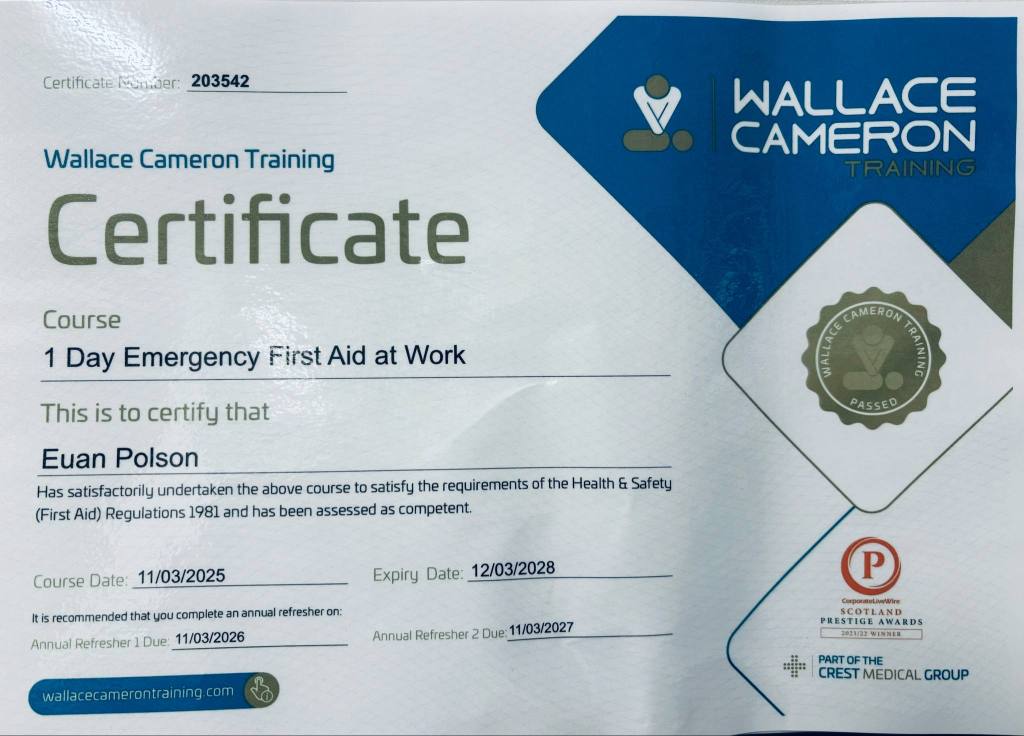
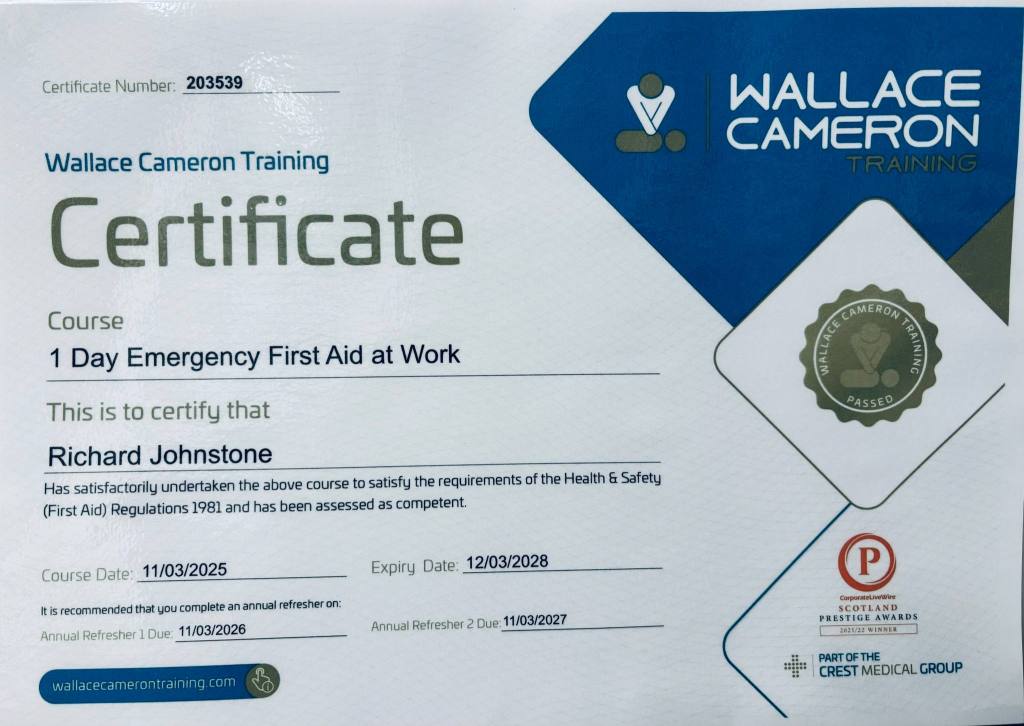
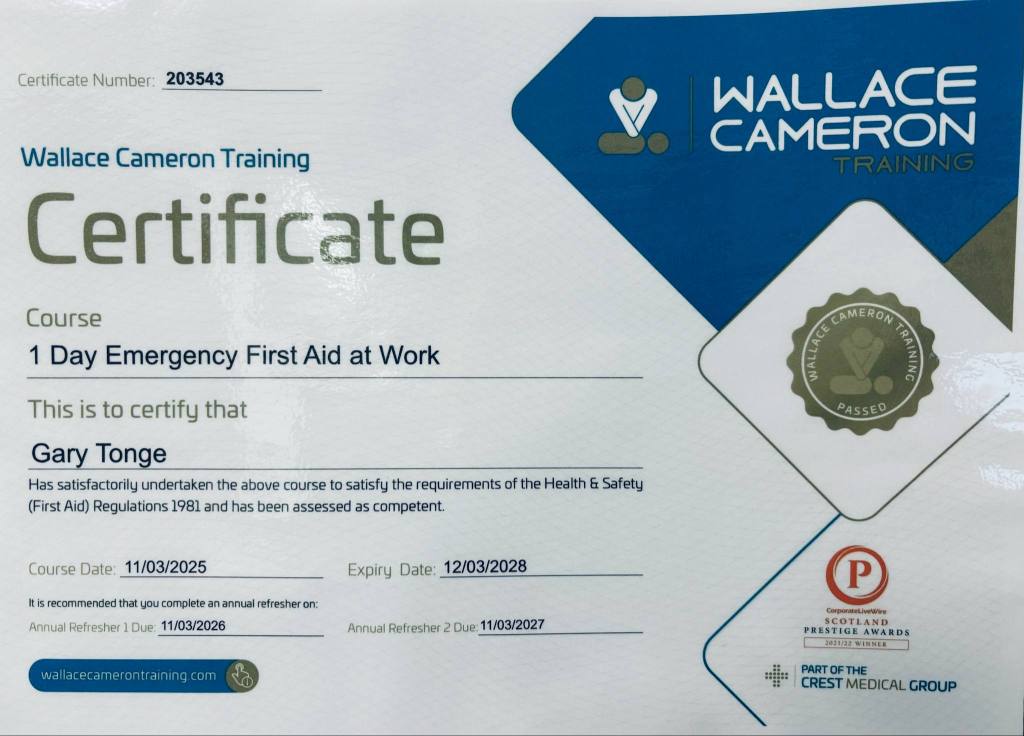
    On the 11th March 2025 Course Manager Richard Johnstone, Deputy Course Manager Steve Frost, First Assistant Greenkeeper Euan Polson, Senior Greenkeeper Owen Mackay and Golf Course Mechanic Gary Tonge attended a 1-day emergency first aid at work course held at Royal Aberdeen Golf Club by Wallace Cameron Training.

    Having a first aid qualification will not only benefit Royal Aberdeen but will also add to the teams continued personal development. With 10 employees operating heavy machinery on a daily basis, chemicals or hazardous materials it presents a greater chance of injury and is deemed a high risk environment, so it is essential we have staff fully trained to administer first aid is needed.

    First aid training is an essential part of any workplace that should not be overlooked. Not only does it ensure that any emergencies will be handled with care, but it is a legal requirement that can be costly if neglected and it is important to instill confidence in employees that they are well looked after.

    This covers most of the topics covered on the 1 -day course and the skills and knowledge gained will allow the team to be able to deal with:

    Action at an emergency
    Poisoning
    Burns and scalds
    Cardiopulmonary Resuscitation (C.P.R.)
    Use of an AED (Automated External Defibrillator)
    Wounds and Bleeding
    Anaphylactic shock
    Neck and Back injuries
    Soft tissue injuries
    Unconscious casualties
    Treatment of Shock
    Recognise Major illness including Heart Attack, Stroke, Diabetes, epilepsy, asthma etc.
    Head injuries
    HSE Legislation and requirements record keeping etc

  • Balgownie – Autumn Maintenance

     Our Annual Autumn maintenance took place between 21st – 23rd October 2024 and gave us the opportunity to Hollow Core the greens and surrounds . This practice was carried out to remove a large percentage of organic matter, relieve compaction, increase root development, improve drainage and provide the material to create a playing surface for our new contingency first green and approach. By removing the accumulated fibre it allows us to exchange the poorer soils to a better one through a straight sand topdressing helping to firm up all surfaces providing true links like conditions.

    We also took the decision to apply Chewings and slender creeping fescues which offers the best solution for year-round performance. A combination of a drop spreader and vredo disc seeder was used to apply the fescue seed before we worked any excess seed into the holes using  switches to cover the seed within the holes with our indigenous dune sand topdressing. This provided the seeds with the correct growing medium and some protection from the elements. We Overseeded with around 200kg of Fescue and the seed should germinate within the next month due to the slightly cooler conditions. To achieve maximum seed establishment and rapid surface recovery without creating a flush of growth that would negatively affect playing characteristics we applied a granular feed called C Complex 4-3-4+5CaO+3MgO . We chose this product as it has proven to be effective in aiding recovery while maintaining turf health and vigour without any negative effect on playability.

    Fescue is the most appropriate species to links sites across the UK and with adequate management will provide characteristics that are typical of links golf here at Royal Aberdeen. The practice of overseeding is a vital aspect of what we are trying to achieve at and will now remain part of our annual maintenance at least twice a year.

    The Maintenance procedures were carried out at this time of year when the air and soil temperatures are ideal allowing recovery times to be kept to a minimum. This short term disruption will give us long term benefits giving us firm and true surfaces all year round.

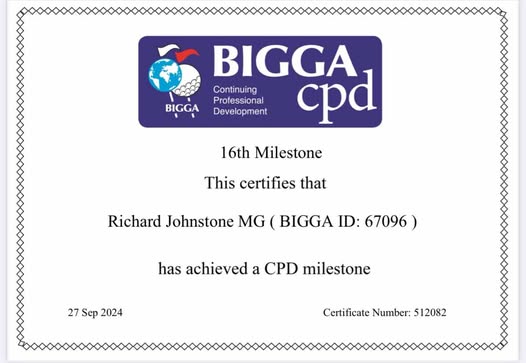
  • Staff Training – BIGGA CPD Milestone Certificate

    On 27/09/2024Course Manager Richard Johnstone was awarded with a 16th BIGGA CPD Milestone certificate in recognition of his continued education and training in 2024/2025.

    The BIGGA CPD scheme is made up of members who are looking to improve their professional knowledge and competence within the industry while developing skills and personal qualities necessary for the execution of technical duties throughout their working life

    “No professional should stand still – we are learning – all the time”

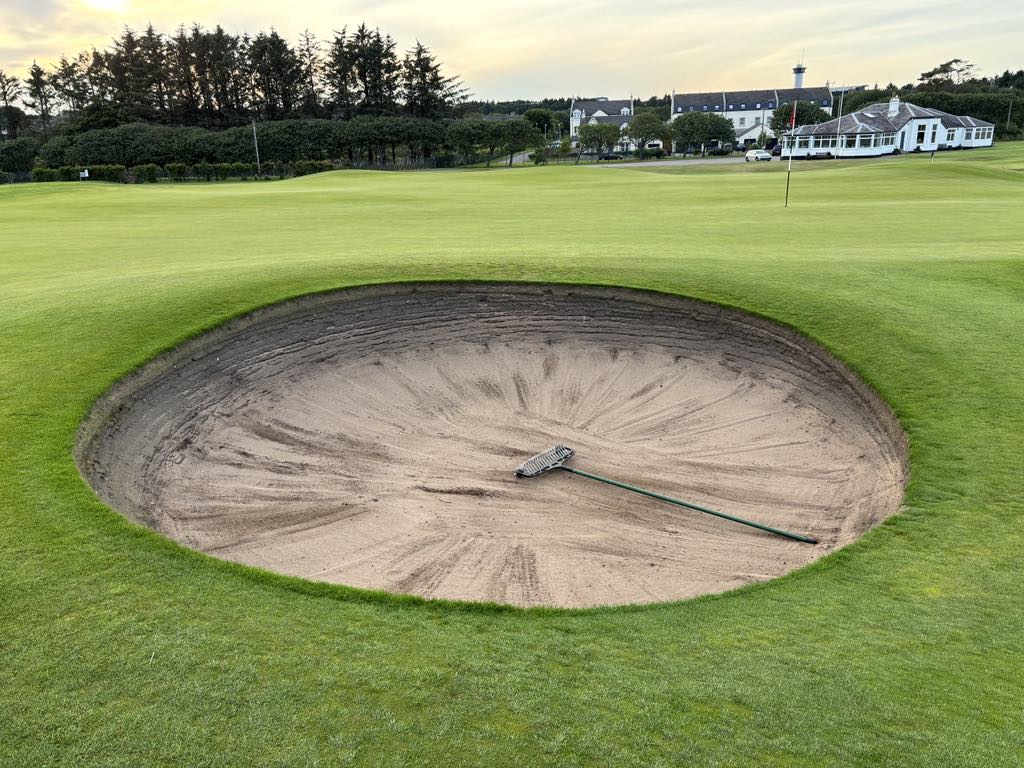
  • Bunker Etiquette / Advice

    #1 – Locate the lowest spot around the edge of the bunker that is convenient to your ball try not to walk down a steep face possibly damaging the turf edge, and leaving deeper footprints.

    #2 – Carry the rake into the bunker if needed. Contrary to what some golfers believe, it is within the rules and can speed up play, be sure you do not allow the rake to touch or test the sand except when you drop it.

    #3 – Before playing the shot the rake should be dropped behind the area where you take your stance and not used to align the shot.

    #4 – Begin raking over the signs of play, to restore the surface without displacing too much sand by pushing the rake away from you a few times to spread the excess sand forward towards the face.

    #5 – Step out of the bunker and make a final few passes. The Rake Should Be Placed Inside the middle of the Bunker. This is normally a balls natural finishing position (especially in our small links pot bunkers) and if your ball hits it , you’re already in the bunker. We feel there is more likelihood of a ball being deflected into, or kept out of, a bunker if the rake is placed outside the bunker.

    If the sand was to be all raked back towards the entry point and rakes left around the edges it almost makes it impossible for the next person who lands in the bunker to escape.